Introduction: A Year That Redefined Medical Possibility
We stand at an inflection point in medical history. The breakthroughs emerging from 2025 represent far more than incremental progress—they signal a fundamental shift in how we diagnose, treat, and prevent disease. From surgeons operating across continents to blood tests that can detect Alzheimer's disease before symptoms appear, this year has delivered innovations that will reshape healthcare for millions worldwide.
The implications are profound. These aren't merely technological achievements confined to research labs; they're practical solutions that will soon touch the lives of patients in rural villages and urban centers alike. As a medical journalist who has covered healthcare innovation for years, I can confidently say that 2025 marks a watershed moment in our collective fight against disease.
The Remote Surgery Revolution: Breaking Geographic Barriers
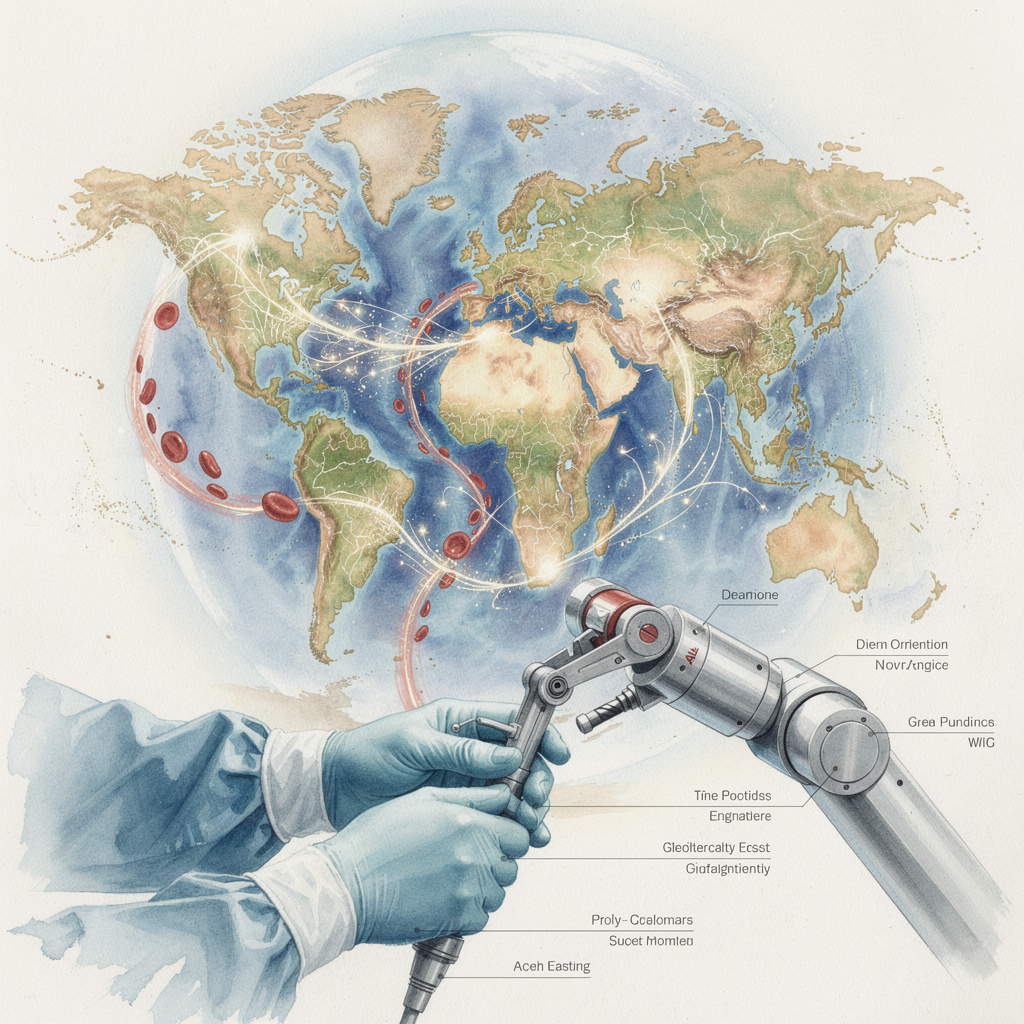
Imagine a world where a patient in a remote region has access to the same surgical expertise as someone in a major metropolitan medical center. In 2025, this vision moved closer to reality with groundbreaking robotic surgeries performed across distances of 7,000 miles.
This achievement builds upon established telesurgery platforms like the da Vinci system, refined over decades. However, the scale and distance of 2025's accomplishments represent a quantum leap. These transcontinental procedures demonstrate that with sufficient bandwidth, precision robotics, and skilled surgical teams, geography no longer needs to be a barrier to excellence in surgical care.
The practical implications are staggering. In developing nations and underserved regions, patients often face months-long waits for specialized surgical procedures, if they can access them at all. Remote robotic surgery could compress these timelines dramatically. Recent precedents from 2024, including 5G-enabled kidney transplants performed across 3,000 miles in China, proved the concept's viability. Now, with 2025's expanded demonstrations, we're seeing this technology move from proof-of-concept to scalable solution.
The technology addresses more than just distance—it addresses surgical disparity. A surgeon with decades of expertise in a rare procedure can now guide operations happening thousands of miles away, ensuring consistent quality regardless of location. This democratization of surgical expertise could fundamentally alter healthcare outcomes in underserved populations, potentially saving thousands of lives annually.
The Alzheimer's Blood Test: Early Detection Changes Everything
For decades, Alzheimer's disease diagnosis relied on cognitive testing and imaging—approaches that typically identified the disease only after significant damage had occurred. The introduction of a blood test to aid Alzheimer's diagnosis in 2025 represents a seismic shift in our approach to neurodegenerative disease.
This breakthrough builds on years of research into biomarkers, particularly phosphorylated tau (p-tau), which accumulates in the brain long before cognitive symptoms emerge. Institutions like Washington University have been instrumental in validating these biomarkers, demonstrating that blood tests can reliably detect the pathological changes characteristic of Alzheimer's disease.
Why does this matter so profoundly? The window between pathological changes and symptom onset—what researchers call the "asymptomatic phase"—can span years or even decades. During this period, the disease progresses silently, but interventions may be most effective. A simple blood test opens the door to early intervention, potentially allowing physicians to begin treatment before irreversible cognitive decline occurs.
The implications extend far beyond individual patients. Population-level screening becomes feasible with a non-invasive blood test. This enables researchers to identify at-risk individuals for clinical trials of disease-modifying therapies like lecanemab, which has shown promise in slowing cognitive decline in early-stage disease. Accelerating these drug trials could bring effective treatments to market years sooner than traditional research timelines allow.
Consider also the integration with artificial intelligence. Blood biomarker data combined with AI-driven predictive models could enable truly personalized medicine—identifying which patients are most likely to progress, predicting optimal treatment timing, and even forecasting individual response to therapies. We're not simply diagnosing disease earlier; we're entering an era of predictive, preventive neurology.
Beyond These Two: A Broader Ecosystem of Innovation
While remote robotic surgery and Alzheimer's blood tests capture headlines, 2025 has delivered additional breakthroughs that collectively paint a picture of healthcare's future. Brain implants designed to restore independence, opioid prevention technologies, and numerous other innovations demonstrate that progress is occurring across multiple fronts simultaneously.
These interconnected advances create a multiplier effect. Better diagnostics like the Alzheimer's test feed into more targeted treatments. Expanded surgical access through telesurgery robotics enables broader application of proven interventions. Enhanced neural interfaces restore function to those previously limited by disability. Together, these innovations create a more comprehensive, equitable, and effective healthcare ecosystem.
The Global Context: Why Timing Matters
These breakthroughs arrive at a critical moment. The World Health Organization projects that dementia cases will reach 152 million by 2050, with the burden falling disproportionately on low- and middle-income nations. Simultaneously, surgical disparities remain among healthcare's most intractable problems, with hundreds of millions lacking access to safe surgery globally.
2025's innovations directly address these challenges. Remote robotic surgery can extend surgical access to underserved regions. Alzheimer's blood tests enable early detection and intervention in populations that currently lack access to advanced neuroimaging. These aren't solutions that benefit only wealthy nations—they're tools designed for global application.
Conclusion: The Inflection Point
As I reflect on 2025's medical breakthroughs, I'm struck by a fundamental truth: the future of healthcare won't be determined by any single innovation, but by how quickly we integrate these advances into clinical practice and make them accessible to all who need them.
The robotic surgery performed 7,000 miles away and the blood test that detects Alzheimer's before symptoms appear represent more than technical achievements. They embody a commitment to transcending the barriers—geographic, economic, temporal—that have historically limited healthcare access.
The real test ahead isn't whether these technologies work; we've proven they do. The test is whether we have the collective will to implement them equitably, to train the necessary workforce, to invest in infrastructure, and to ensure that breakthroughs in wealthy nations benefit patients everywhere.
2025 has shown us what's possible. The next chapter—implementation and global access—will determine whether these breakthroughs truly transform healthcare, or remain innovations available only to the privileged few. The stakes have never been higher, and the potential has never been greater.