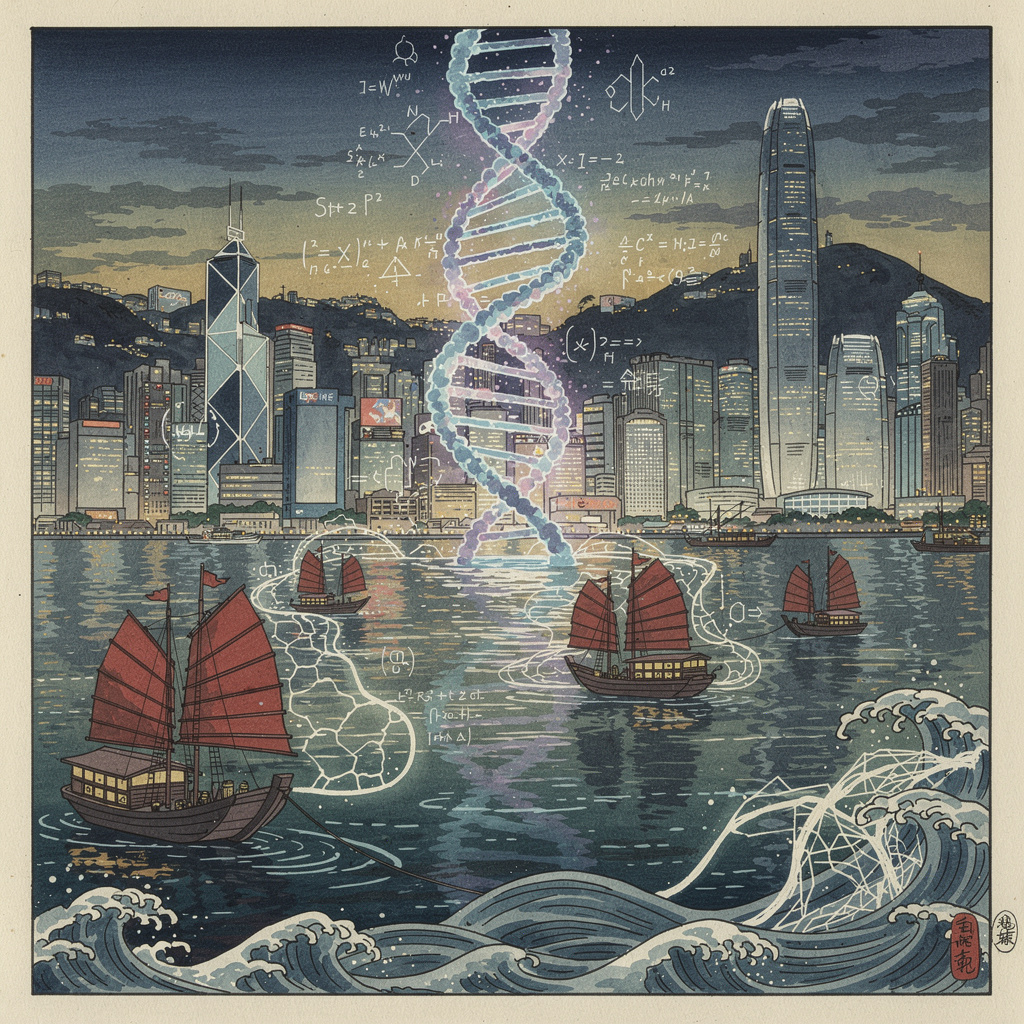
On December 30, 2025, Insilico Medicine made history by becoming the first artificial intelligence-focused drug discovery company to list on the Hong Kong Stock Exchange's Main Board. The milestone wasn't just another biotech IPO—it represented a watershed moment for the intersection of generative AI and pharmaceutical development, and a powerful signal that the market is ready to commit serious capital to this transformative technology.
With HKD 2.277 billion (approximately US$290–293 million) raised, Insilico's listing under stock code 3696.HK marked Hong Kong's largest biotech IPO of 2025. What happened next told an even more compelling story: shares surged 25% on their debut day, a resounding affirmation of investor confidence in AI-powered drug discovery. This isn't just about one company's success—it signals the arrival of a new era in how we discover and develop life-saving medicines.
The Convergence That Changes Everything
Insilico Medicine represents something fundamentally different from traditional biotech companies. Rather than relying solely on conventional screening methods and human expertise, the company leverages generative AI to conduct end-to-end drug discovery and development. This technological shift is comparable to the transition from horse-drawn carriages to automobiles—it's not an incremental improvement, but a categorical leap in capability and efficiency.
The company's platform targets some of medicine's most challenging areas: oncology, immunology, and fibrosis-related diseases. By applying machine learning algorithms to vast datasets of biological and chemical information, Insilico can identify promising drug candidates, predict their efficacy and safety profiles, and accelerate the path from concept to clinical testing. This approach has the potential to compress timelines measured in years into months and to reduce the astronomical costs associated with traditional drug development.
What makes this particularly significant is that Insilico has achieved clinical-stage status—meaning it has drugs in human trials—while leveraging AI as its core competitive advantage. This isn't a theoretical promise of future applications; it's a demonstrated capability with real clinical progress.
Hong Kong's Strategic Play in the Biotech Revolution
Insilico's listing wouldn't have been possible without Hong Kong's deliberate positioning as a global biotech hub. The Hong Kong Stock Exchange's Chapter 18C rules, implemented to attract innovative biotechnology companies, allow for the listing of pre-profitable firms that demonstrate significant research and development potential. This regulatory framework has proven remarkably effective at drawing cutting-edge biotech ventures to the exchange.
The timing is particularly strategic. As global markets grapple with mixed equity performance and investors search for compelling growth narratives, Hong Kong is positioning itself as the Asian answer to Nasdaq's biotech dominance. The exchange faces competition not only from American markets but also from mainland China's rapid emergence as a biotech innovation center. By attracting pioneering firms like Insilico, Hong Kong reinforces its credentials as a serious contender in the global race for biotech leadership.
Insilico's success—particularly the enthusiastic market reception—validates HKEX's strategy. The 25% opening day surge reflected genuine investor recognition that AI-driven drug discovery represents a compelling investment thesis with substantial upside potential.
The Ripple Effects: What This Means for the Industry
Beyond Insilico's own success, this IPO carries significant implications for the broader biotech and AI sectors. First, it provides proof-of-concept that investors will commit substantial capital to AI drug discovery platforms. This validation is likely to inspire a wave of similar listings and funding rounds globally. We can expect other AI-focused biotech companies to accelerate their paths to public markets, particularly those with clinical-stage programs demonstrating real-world progress.
Second, the IPO underscores the maturation of generative AI applications in healthcare. For years, AI in drug discovery existed in a somewhat speculative realm—promising but unproven at scale. Insilico's clinical programs and market validation suggest that the technology has crossed a critical threshold from experimental to practical. This shift will likely accelerate adoption across the pharmaceutical industry, from large multinational corporations to emerging biotech startups.
Third, this development highlights Hong Kong's determination to establish itself as a global innovation center. By successfully attracting and facilitating the listing of frontier technology companies, Hong Kong is competing for the same talent, capital, and intellectual property that historically concentrated in Silicon Valley and Boston. The success of Insilico's IPO strengthens Hong Kong's hand in these global competitions.
Strategic Use of Capital: Building the Future
Insilico's plans for the IPO proceeds reveal an ambitious vision for scaling operations and advancing its pipeline. The company intends to use funds to advance its clinical programs—accelerating the path to potential drug approvals—while simultaneously expanding early-stage discovery efforts. This dual approach is crucial: it maintains near-term clinical momentum while building the long-term pipeline necessary for sustained success.
The company also plans to invest in developing new AI models, recognizing that competitive advantage in this space depends on continuous technological innovation. As more companies enter the AI drug discovery space, maintaining edge through superior algorithms and computational approaches becomes essential.
Additionally, operational scaling is critical. As Insilico moves from discovery into development and commercialization, infrastructure demands multiply exponentially. The capital raised will help build the teams, facilities, and partnerships necessary to bring drugs from laboratory to patients.
Looking Forward: The AI-Biotech Convergence Accelerates
As we reflect on Insilico Medicine's historic listing, several implications become clear. First, we're witnessing the emergence of a new category of biotech company—one where artificial intelligence isn't an auxiliary tool but the fundamental engine of value creation. These companies operate according to different economics and timelines than traditional biotech, potentially offering superior returns for investors willing to embrace the technology.
Second, the successful IPO validates the commercial viability of generative AI in healthcare applications. This validation will likely accelerate investment in AI across the entire healthcare ecosystem, from drug discovery to diagnostics to personalized medicine.
Third, Hong Kong's success in attracting Insilico positions the exchange and the region as genuine alternatives to traditional biotech financing centers. This geographic diversification of biotech innovation and capital is healthy for the global system, reducing concentration risk and fostering innovation across multiple centers of excellence.
The path forward won't be without challenges. Regulatory approval for AI-discovered drugs will require careful validation. Competition will intensify as more players enter the space. Market dynamics will inevitably create winners and losers. But the fundamental trajectory seems clear: AI-driven drug discovery is transitioning from novelty to necessity, and Insilico Medicine's successful IPO marks a pivotal moment in that transformation.
For investors, industry participants, and patients alike, this moment carries profound significance. We're witnessing the early stages of a technological revolution that could fundamentally accelerate the pace of medical innovation and expand our ability to treat previously intractable diseases. Insilico's 25% opening day surge wasn't just about one company's stock price—it was the market's affirmation that this future has arrived.