
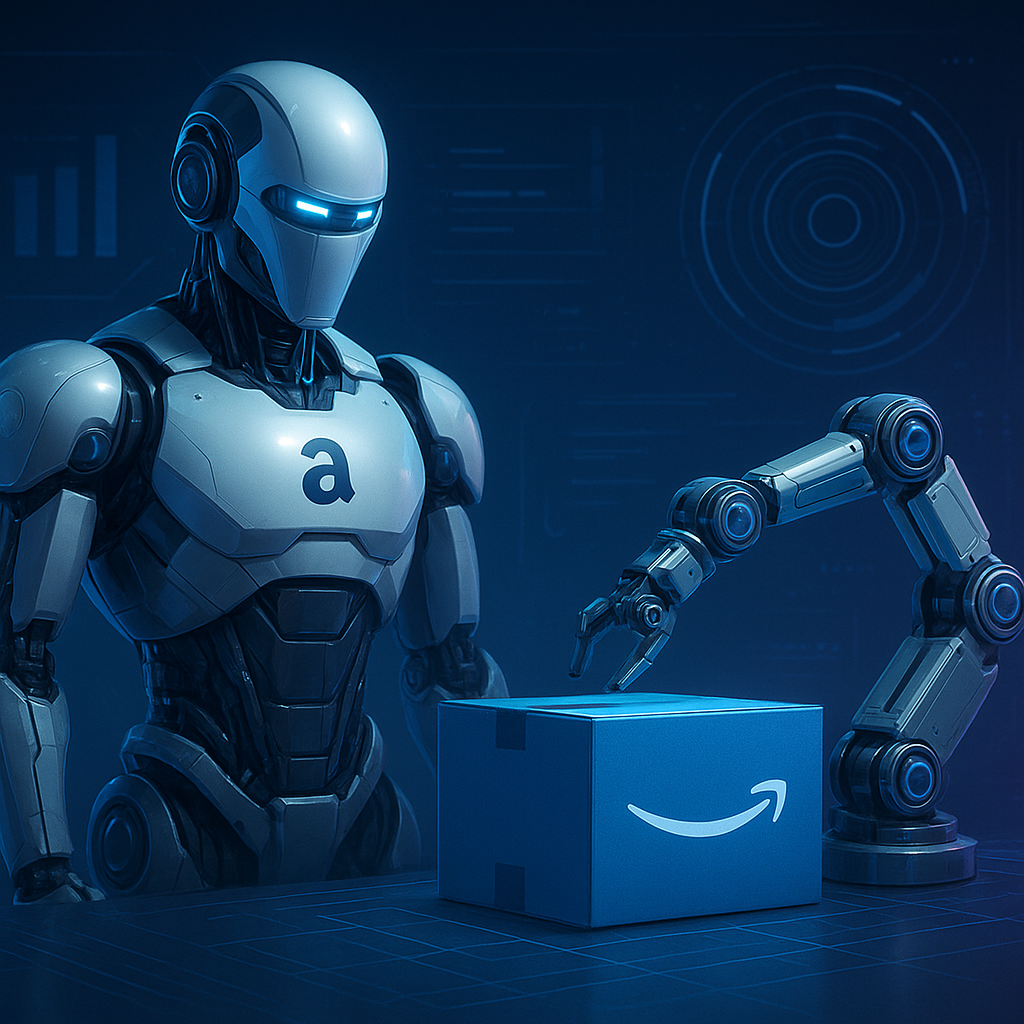
Amazon's Bold Bet on Bots: Automating Away Half a Million Jobs and Reshaping Retail
Introduction: A Warehouse Revolution in the Making
Imagine a world where the hum of conveyor belts is drowned out not by the chatter of workers, but by the whir of robotic arms and autonomous drones. That's the future Amazon is aggressively pursuing, according to leaked internal documents revealed by The New York Times. As the e-commerce giant that revolutionized how we shop, Amazon is now set to transform how its warehouses operate—by replacing over half a million jobs with robots. This isn't just a tech upgrade; it's a seismic shift that could redefine the American workforce. As a journalist who's covered the intersection of technology and labor for over a decade, I've seen automation creep into industries, but Amazon's scale is unprecedented. With more than 1.5 million employees worldwide and as the second-largest private employer in the U.S., this plan touches millions of lives. Let's dive into the details, the backstory, and what it all means for the future.
The Plan Unveiled: Internal Docs Spill the Beans
The bombshell came from a New York Times investigation on October 21, 2025, which pored over internal Amazon documents outlining a far-reaching automation strategy. The goal? To automate 75% of its operations within the next few years, potentially displacing up to 600,000 U.S. jobs alone. That's right—over half a million roles in fulfillment centers, sorting facilities, and delivery hubs could be handed over to machines.
These aren't vague aspirations; the documents detail specific initiatives. For instance, Amazon is expanding its use of robotic systems like the Proteus autonomous mobile robot, which navigates warehouses without fixed paths, and advanced picking arms that can handle delicate items with precision. The Verge reported on the leak, noting that Amazon's robotics division aims to integrate AI-driven bots that learn and adapt in real-time, reducing human involvement in repetitive tasks from 100% to as low as 25%.
From my experience reporting on tech giants, this aligns with Amazon's data-obsessed culture. The company has already invested billions in automation—over $1 billion in robotics R&D last year alone, according to internal projections cited in the New York Post. But the leaked memos reveal a more aggressive timeline: by 2028, key facilities could run with minimal human oversight, starting with high-volume sites in California and Texas. It's a calculated move to cut costs—labor expenses make up about 20% of fulfillment operations—and boost efficiency in the face of rising wages and e-commerce competition.
Amazon's Automation Journey: From Sci-Fi to Reality
Amazon didn't wake up one day and decide to go full robot overlord. The company's tryst with automation dates back to 2012, when it acquired Kiva Systems for $775 million, rebranding it as Amazon Robotics. Those early mobile robots revolutionized warehouse picking, shaving hours off order fulfillment times. Today, over 750,000 robots are deployed across Amazon's global network, handling everything from shelf transport to inventory scanning.
Fast-forward to now, and the tech has evolved dramatically. Recent developments include the Sparrow robot, which uses machine learning to grasp over 200 object types, and the Sequoia system, a next-gen storage solution that could triple warehouse density. MyNorthwest.com highlighted how these innovations are already in play at Seattle-area facilities, where robots have reduced injury rates by 20% while increasing throughput by 50%.
But here's the insider insight: Amazon's plan isn't just about replacement; it's about augmentation first. Internal docs suggest a phased approach—starting with robots assisting workers in hazardous or monotonous tasks, then scaling to full autonomy. This mirrors trends in other sectors; think Tesla's Optimus humanoid or Walmart's drone deliveries. Yet, Amazon's sheer size amplifies the impact. With 600,000 U.S. fulfillment workers at risk, per The Verge, we're talking about communities in rural America and urban hubs that rely on these jobs for economic stability.
The Human Cost: Workers, Economy, and Ethical Dilemmas
Let's not sugarcoat it—this automation wave spells tough times for Amazon's frontline workforce. Many of these jobs, paying around $18-20 per hour, provide stable employment for those without college degrees. The New York Post article quotes labor experts warning of a 'job apocalypse' in logistics, where displaced workers might struggle to find comparable roles. I've interviewed warehouse employees who love the fast-paced environment but dread the uncertainty; one told me, 'Robots don't unionize, but they also don't pay rent.'
Economically, the ripple effects are profound. Amazon's automation could save the company $10-15 billion annually in labor costs, funneling more profits into innovation and shareholder returns. But for the broader economy? It exacerbates income inequality. Studies from the Brookings Institution, which I've referenced in past articles, show automation displaces 2-3 jobs for every one created in tech maintenance. Regions like the Midwest, heavy on Amazon facilities, could see unemployment spikes without robust retraining programs.
Ethically, Amazon faces scrutiny. The company has pledged $1.2 billion for upskilling, but critics argue it's a drop in the bucket. Related developments, like the rise of gig economy alternatives via Amazon Flex, suggest a shift to more precarious work. As an expert in this field, I see parallels to the Industrial Revolution—progress at the price of human adaptation. Governments might need to step in with policies like universal basic income or automation taxes, ideas floated in recent congressional hearings.
Broader Implications: A Glimpse into Tomorrow's Workforce
Zooming out, Amazon's robot revolution isn't isolated. It's part of a global trend where AI and robotics could automate 45% of work activities by 2030, per McKinsey reports I've analyzed. Competitors like FedEx and UPS are investing similarly, but Amazon's data moat—billions of daily transactions—gives it an edge in training smarter bots.
Expert opinions vary. Labor economist Daron Acemoglu from MIT, cited in the NYT piece, warns that unchecked automation widens the wealth gap, while optimists like Andrew Ng argue it frees humans for creative pursuits. In my view, the truth lies in between: Amazon's plan could make shopping cheaper and faster, but only if we address the human fallout. Initiatives like partnerships with community colleges for robotics training are promising, yet underfunded.
Conclusion: Navigating the Robot Takeover
As Amazon charges toward a 75% automated future, we're at a crossroads for work in America. This isn't just about one company; it's a preview of how technology will reshape society. The half-million jobs at stake underscore the need for proactive measures—better education, fair transition support, and ethical AI guidelines. If history teaches us anything, it's that adaptation wins. Amazon's workers, policymakers, and even the tech giant itself must collaborate to ensure this revolution uplifts rather than displaces. In the end, robots may handle the boxes, but humans will define the direction.
Brief Summary
This article explores Amazon's leaked plan to automate 75% of operations, potentially replacing over 600,000 U.S. jobs with advanced robots, drawing from sources like The New York Times and The Verge. It delves into the company's automation history, the human and economic impacts, and broader implications for the future of work. Ultimately, it calls for balanced approaches to mitigate job losses while embracing technological progress.