America's Drug Discovery Crisis: How Policy Failures Are Ceding Innovation Leadership to China
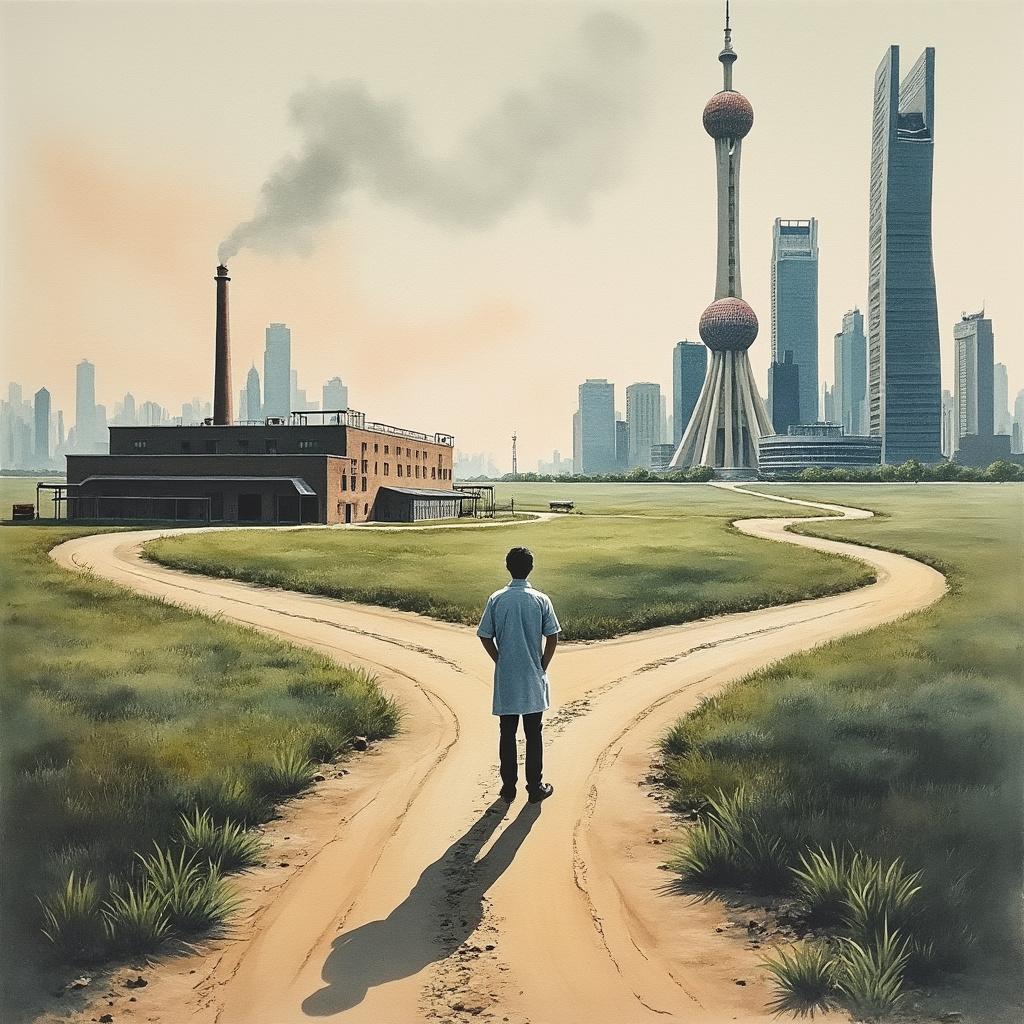
The numbers don't lie, and they're deeply troubling. A comprehensive analysis of drug discovery trends reveals that the United States—long the undisputed leader in pharmaceutical innovation—is rapidly losing ground to China. This isn't a hypothetical concern or a distant threat. It's happening now, driven by policy decisions that prioritize protection over excellence, with profound implications for American patients, the economy, and global health.
We are witnessing a pivotal moment in American science. The question is whether we'll act before it's too late.
The Data That Should Alarm Us All
Recent analysis of drug discovery performance between the U.S. and China reveals an unambiguous trend: China's trajectory in biopharma innovation is accelerating while America's leadership erodes. This isn't about losing a single market or one therapeutic area—it's about losing our competitive edge across the entire innovation ecosystem.
The evidence points to a troubling pattern: while American scientists remain world-class, the systems supporting them are increasingly antiquated and risk-averse. Federal funding mechanisms, particularly those administered by the National Institutes of Health (NIH) and National Science Foundation (NSF), have evolved into protective structures that insulate top researchers from international competition. On the surface, this sounds beneficial—why expose our best scientists to global pressure? But the reality is that without competitive pressure, innovation stagnates.
Consider the parallel with American manufacturing. When the auto and steel industries faced international competition in the 1980s and 1990s, they were forced to innovate or perish. Those that innovated survived and thrived. Our research funding system has done the opposite—it has sheltered scientists from exactly the kind of competitive environment that drives excellence. U.S. scientists must compete internationally in the global marketplace, just like workers in other industries do. Yet our funding structures work against this principle.
Policy Failures and Leadership Vacuum
The decline in American drug discovery cannot be separated from recent policy shifts and leadership changes. The FDA, which has historically set the gold standard for regulatory excellence, is experiencing significant departures of experienced leaders in digital health and medical devices. Simultaneously, proposed cuts to NIH funding threaten the research infrastructure that has supported generations of breakthroughs.
These concerns come from industry leaders with decades of experience. Pfizer's former head of R&D has issued a stark warning: "Changes at the FDA are going to have a profound impact on drug development, hurting both patients and the industry." This isn't theoretical speculation—it's a warning from someone who has spent decades navigating the drug development landscape and understanding how regulatory certainty drives or deters investment in innovation.
What makes this moment particularly precarious is the convergence of multiple threats. Budget cuts to the NIH reduce funding available for foundational research. FDA leadership changes create uncertainty about approval pathways. Policy signals suggest a retreat from merit-based competition in favor of protectionism. And researchers—already facing funding pressures and policy uncertainty—are beginning to look abroad for opportunities.
The Brain Drain We Can't Afford
One of the most damaging consequences of these policy failures is the "brain drain" of American scientists seeking opportunities elsewhere. This represents a reversal of historical patterns. For decades, the world's best scientists came to America. Now, some of our best are leaving.
Why? Because the incentive structures have shifted. A researcher who might have spent their entire career at an American institution now faces funding uncertainty, regulatory unpredictability, and a sense that the system no longer values merit-based competition. China, by contrast, is aggressively recruiting talent, offering substantial resources and a clear pathway to impact. The choice becomes less about patriotism and more about where one can actually do their best work.
This matters because drug discovery is ultimately a human enterprise. The best scientists attract the best collaborators, students, and support systems. Lose the people, and you lose the innovation pipeline. It's that straightforward.
What's at Stake
The implications extend far beyond corporate competition or national pride. When drug discovery capability shifts geographically, so does the ability to address emerging health threats. The next pandemic breakthrough, the next cancer treatment, the next cure for a rare disease—these innovations will increasingly originate from wherever the best funding, regulatory clarity, and competitive environment exist.
For American patients, this means potentially delayed access to new treatments. For the American economy, it means lost jobs, reduced tax revenue, and diminished influence in global health policy. For global health, it means that innovation may be driven by different priorities and values than those that have historically guided American research.
The crisis is compounded by its systematic nature. It's not that China has suddenly become better at science—they haven't, by most measures. Rather, they have created a system that aggressively pursues pharmaceutical innovation with sustained investment and clear incentives. Meanwhile, America has allowed its system to become encumbered with protectionism, budget uncertainty, and policy inconsistency.
The Path Forward
Recognizing the problem is the first step. The second is acting with urgency and clarity. This requires:
Restoring competitive funding mechanisms that reward excellence regardless of institutional affiliation, ensuring that American scientists must earn their support through merit rather than receiving it through institutional protection.
Stabilizing the FDA with experienced leadership and clear regulatory pathways that provide certainty to investors and researchers while maintaining rigorous safety standards.
Protecting NIH funding as a strategic investment in future innovation, not a discretionary expense to be cut when budgets tighten.
Creating incentives for top talent to remain in America by demonstrating that the system values their work and provides a pathway to meaningful impact.
These aren't radical proposals. They represent a return to the principles that made American science dominant: merit-based competition, sustained investment, regulatory excellence, and a culture that celebrates innovation.
Conclusion: A Wake-Up Call
The data on drug discovery in the U.S. versus China should serve as a wake-up call. We are not inevitable winners in the global innovation race. Our historical advantages can erode, and they are eroding. But unlike many competitive challenges, this one remains within our control. The decisions we make in the next few years—about funding, regulation, and policy—will determine whether American science remains a global leader or becomes a cautionary tale about how even dominant systems can decline through neglect and misguided priorities.
The stakes could not be higher. For patients awaiting new treatments, for scientists seeking to do their best work, and for a nation that has long defined itself through innovation, we cannot afford to lose this race. The data is clear. The results are alarming. Now comes the hard part: actually responding.