
China's $114M AI-for-Science Investment Signals a New Era of Specialized AI Leadership
In the rapidly evolving landscape of artificial intelligence, a significant shift is occurring in how we approach scientific discovery. Beijing-based DP Technology Co. Ltd. has just secured $114 million in Series C funding, marking a pivotal moment for both the startup and the broader trajectory of AI-driven research globally. This substantial investment signals something crucial: the intersection of artificial intelligence and scientific research is no longer speculative—it's becoming essential infrastructure.
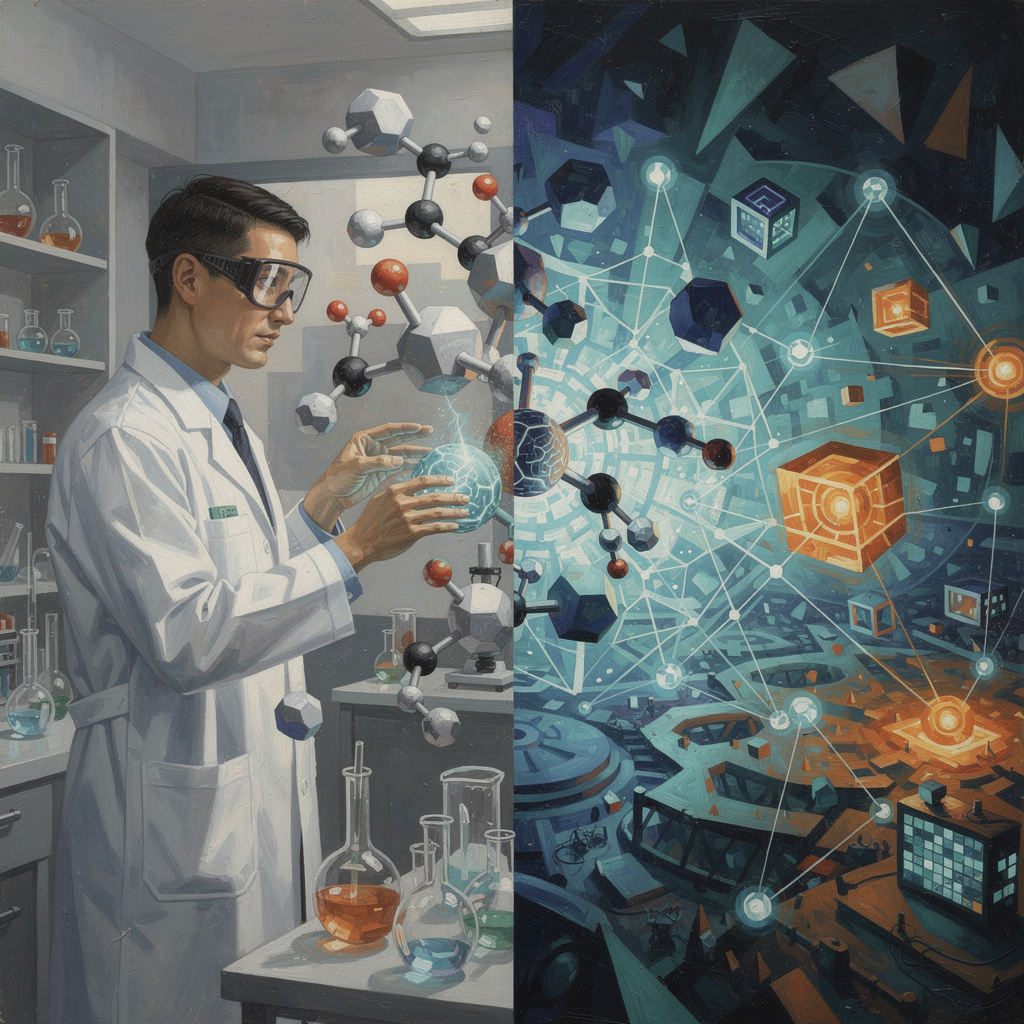
This funding round represents a watershed moment for what's known as "AI-for-Science"—a specialized field that uses machine learning to accelerate discovery across pharmaceuticals, materials science, and related domains. What makes DP Technology's raise particularly significant is not just the amount, but what it reveals about global investor confidence in China's capacity to lead in this critical niche.
Why This Funding Matters Now
The timing of DP Technology's Series C round is instructive. This funding injection arrives at a moment when the global scientific community increasingly recognizes that traditional research timelines are unsustainable. Drug discovery that once took over a decade and billions of dollars. Battery development constrained by material limitations. These bottlenecks are precisely where AI-for-Science companies identify transformative opportunities.
DP Technology's platform is designed to accomplish something deceptively simple yet profoundly complex: analyze vast datasets to identify patterns and accelerate innovation. Whether processing clinical trial data or modeling molecular structures, the company's tools promise to significantly compress research cycles. The $114 million funding will directly support three critical areas: hiring specialized talent, advancing research and development, and expanding the company's AI toolkit across multiple scientific domains.
What stands out about this investment is how it reflects a broader realization among sophisticated investors: the real competitive advantage in AI isn't building larger language models or more powerful compute infrastructure. It's applying AI intelligently to problems that matter—problems where acceleration delivers tangible, real-world consequences.
China's Emerging Leadership in AI-for-Science
For years, the narrative around AI innovation has been dominated by American and increasingly European players. OpenAI, Google, and other Western companies have captured headlines and capital. Yet DP Technology's successful fundraising suggests the narrative is more nuanced than headlines suggest.
China's AI-for-Science sector is experiencing genuine momentum. This isn't simply about deploying capital at technology; it's about recognizing a strategic gap and filling it systematically. The pharmaceutical industry faces enormous pressure to innovate while managing costs. The same applies to battery technology, where China has established itself as a manufacturing powerhouse but now seeks to lead in innovation.
DP Technology's funding round should be understood within this context: it's part of a deliberate, sustained effort by Chinese investors and entrepreneurs to dominate specialized AI applications. The startup isn't competing directly with OpenAI or Google on general-purpose AI. Instead, it's establishing a defensible niche where domain expertise, scientific knowledge, and AI capabilities converge.
This strategic positioning is astute. While the broader AI market remains competitive and crowded, the AI-for-Science segment is still relatively nascent. Companies that establish themselves as leaders in drug discovery acceleration, battery optimization, or materials science simulation will enjoy substantial competitive advantages.
The Ecosystem Effect: How This Funding Catalyzes Broader Innovation
What's particularly interesting about DP Technology's raise is its relationship to the broader AI infrastructure ecosystem. Consider developments in cloud AI infrastructure that occurred around the same time. These aren't isolated events; they're part of a coordinated expansion of AI capabilities.
DP Technology will benefit from improved cloud infrastructure, better AI development tools, and expanding compute capacity. Conversely, as specialized AI-for-Science companies like DP Technology scale, they drive demand for the infrastructure that enables their growth. This virtuous cycle—where specialized applications drive infrastructure improvements, which in turn enable more sophisticated applications—is how entire technology ecosystems mature.
This pattern has appeared before in other technology transitions. The mobile revolution required ecosystem-wide improvements in cloud computing, data centers, and development tools. Similarly, the AI-for-Science revolution will require coordinated advances across multiple layers of the technology stack.
The Strategic Implications for Global Competition
As we look toward the coming years, the landscape of AI competition is becoming increasingly fragmented and specialized. The era when a single company or country could dominate all AI applications is fading. Instead, we're seeing the emergence of regional and domain-specific leaders.
DP Technology's success demonstrates that China can compete effectively in specialized AI applications, not just in hardware manufacturing or general-purpose models. This has profound implications for how AI innovation will be distributed globally. We're likely to see:
Specialized Regional Leaders: Rather than a handful of global AI powers, companies like DP Technology will establish dominance in specific applications and regions.
Strategic Partnerships: Western companies seeking to accelerate scientific research may increasingly partner with Chinese AI-for-Science firms rather than building everything in-house.
Talent Competition: As specialized AI-for-Science becomes more lucrative, competition will intensify for scientists and engineers who understand both domain expertise and AI.
Regulatory Considerations: As China develops indigenous AI-for-Science capabilities, questions about technology transfer, data sovereignty, and international collaboration will become more pressing.
Looking Forward: The Implications for Science and Innovation
Ultimately, what matters most about DP Technology's $114 million raise is what the money enables. Faster drug discovery means patients gain access to life-saving treatments sooner. Better battery development accelerates the transition to renewable energy. Improved materials science opens possibilities we haven't yet imagined.
The startup's success also signals to other investors that the AI-for-Science sector merits serious capital allocation. We should expect to see follow-on funding rounds, new startups entering the space, and increased competition among players seeking to establish themselves as leaders in specific scientific domains.
What's most compelling about this moment is the recognition that AI's real value isn't in replacing human intelligence—it's in augmenting human scientific capability. DP Technology's tools won't replace chemists or biologists; they'll make those professionals dramatically more effective. That's a fundamentally different value proposition than the AI applications dominating headlines, and it carries profound implications for how science itself evolves.
Conclusion: A Pivotal Moment in AI's Evolution
DP Technology's $114 million Series C funding round represents more than a successful venture capital transaction. It's evidence of a fundamental shift in how AI is being deployed and valued globally. The age of general-purpose AI dominance may be giving way to an era of specialized, domain-specific applications where regional players can establish significant competitive advantages.
For investors, entrepreneurs, and policymakers, the message is clear: the next frontier of AI value creation lies not in building bigger models, but in applying AI intelligently to problems that matter. DP Technology has recognized this opportunity and secured the capital to pursue it aggressively. Whether the company ultimately delivers on its ambitious vision remains to be seen, but the market has clearly decided the bet is worth taking.
In the coming years, companies that combine deep domain expertise with AI capability—whether in pharmaceuticals, materials science, or other fields—will likely emerge as the real winners in the AI revolution. DP Technology's funding suggests that China intends to lead this critical transition.