
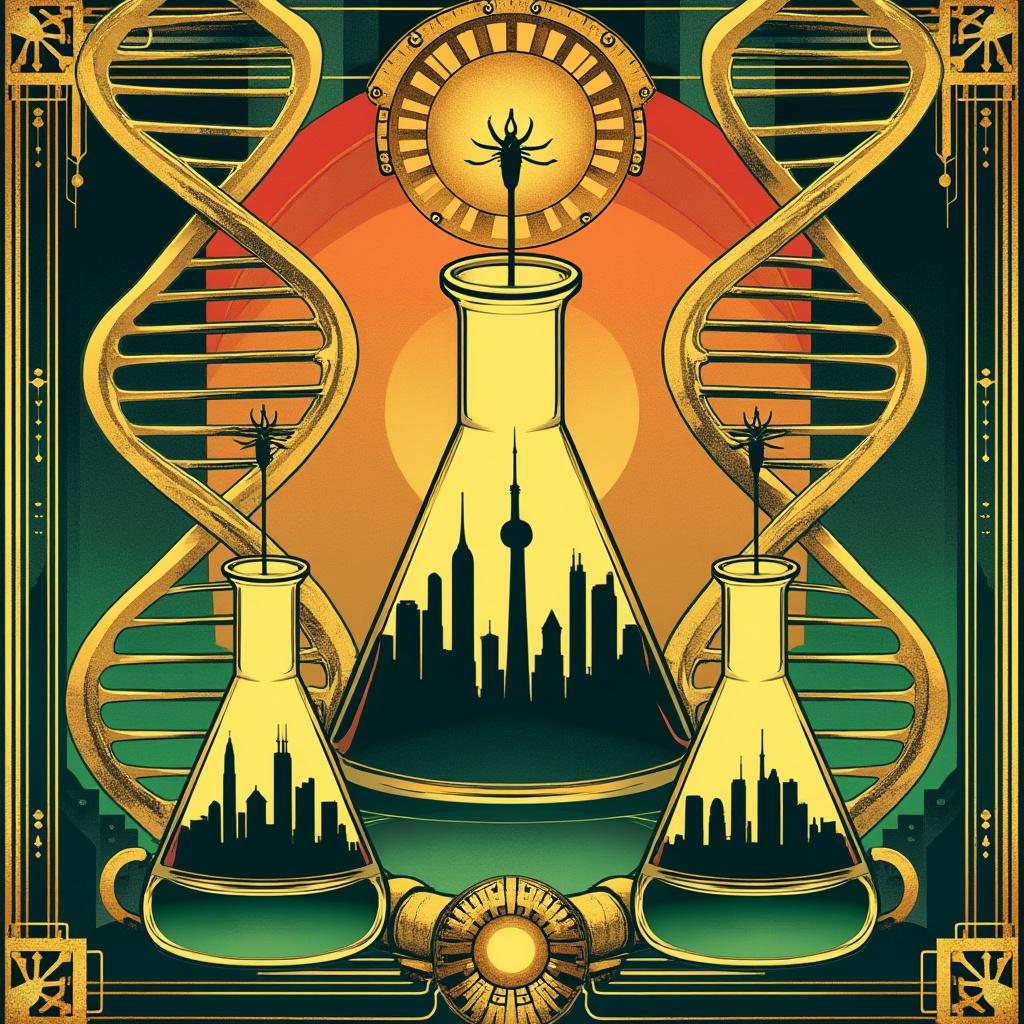
The Cambrian Explosion That's Reshaping Medicine
Imagine a moment in Earth's history when life exploded into countless new forms at breathtaking speed. That's essentially what's happening right now in China's biotech sector—and the implications are profound for global pharmaceutical innovation.
The metaphor is apt. Experts across the industry are using "Cambrian explosion" to describe the unprecedented surge of biotech companies, investment, and drug discovery activity emerging from China. What was once a sector playing catch-up to Western pharmaceutical giants is now operating by a fundamentally different—and arguably superior—playbook. The speed is staggering, the competition is fierce, and the rules of drug discovery are being rewritten in real time.
We are witnessing a genuine inflection point in global pharmaceutical innovation. Understanding what's driving this transformation—and what it means for patients, investors, and the broader industry—is essential for anyone paying attention to the future of medicine.
The Perfect Storm: Capital, Regulation, and Hunger
China's biotech explosion didn't happen by accident. It's the result of three converging forces that created an ideal environment for innovation to flourish.
First, there's the capital. Venture investment in Chinese biotech has surged dramatically, with funding flowing into startups at levels that would have seemed unimaginable a decade ago. This isn't just money—it's patient capital willing to take risks on novel approaches and emerging scientists. The venture ecosystem has matured rapidly, attracting sophisticated investors who understand biotech and are willing to back bold bets.
Second, regulatory barriers have loosened considerably. China's drug approval processes have become increasingly streamlined, allowing companies to move from concept to clinical trials far more quickly than in the United States or Europe. This regulatory flexibility, combined with access to large patient populations for trials, creates a massive competitive advantage for speed.
Third—and perhaps most importantly—there's an almost palpable hunger in the Chinese biotech ecosystem. Companies aren't just competing for market share; they're competing for legitimacy on the global stage. This hypercompetitive environment creates an intensity that drives innovation at a pace that outstrips much of the Western industry.
The result is exponential expansion. The proliferation of biotech firms has become so rapid that simply tracking the number of companies is now a genuine challenge. We're not talking about incremental growth—we're talking about exponential transformation.
Speed, Serendipity, and a New Philosophy
What makes China's approach truly revolutionary isn't just the pace—it's the fundamentally different philosophy driving drug discovery.
Hypercompetition and speed aren't just buzzwords; they're rewriting the actual rules of how drugs get discovered and developed. This competitive intensity is forcing Chinese biotech companies to embrace approaches that Western firms have traditionally avoided or dismissed.
One particularly striking example is the emphasis on dual-target therapies. Rather than following the Western pharmaceutical industry's long-standing preference for single-target drugs, Chinese biotech firms are aggressively pursuing molecules that hit multiple targets simultaneously. This represents a genuine departure from conventional wisdom—and it's working. These dual-target approaches can offer broader efficacy, potentially better clinical outcomes, and novel solutions to problems where single-target drugs have plateaued.
But there's more to the innovation than just molecular design. The entire discovery process operates differently. Chinese biotech companies are embracing what might be called "structured serendipity"—creating environments where unexpected discoveries are not just possible but encouraged. They're willing to pivot quickly when data suggests a different direction. They're comfortable with failure as part of the learning process. And crucially, they're not constrained by the institutional inertia that sometimes slows Western drug development.
This isn't to say that Western biotech lacks innovation—far from it. But the Chinese approach represents a genuine alternative model, one optimized for speed and adaptability rather than the careful, methodical progression that has traditionally characterized pharmaceutical development.
Global Partnerships and the New Competitive Landscape
What's particularly notable is that China's biotech boom isn't happening in isolation. Global partnerships are fueling significant industry development, with Chinese companies increasingly collaborating with—and competing against—Western firms.
These partnerships serve multiple purposes. They provide Chinese biotech companies with access to Western expertise, regulatory knowledge, and distribution networks. Simultaneously, they give Western pharma firms access to Chinese innovation, lower development costs, and large patient populations for trials. It's a genuinely symbiotic relationship that's accelerating drug discovery across both regions.
However, this partnership dynamic also reflects a shift in global pharmaceutical power. A decade ago, partnerships with Chinese biotech were often viewed as secondary or supplementary. Today, they're increasingly seen as essential—not just for cost savings, but for genuine innovation and competitive advantage.
The timing is particularly significant given concurrent shifts in U.S. drug pricing policy. Recent initiatives around Medicare drug pricing and agreements with major pharmaceutical companies to align prices with peer nations are creating new pressures on Western pharma firms. These pricing pressures, combined with rising innovation from China, are fundamentally reshaping the competitive landscape.
What This Means for the Future
The implications of China's biotech Cambrian explosion extend far beyond pharmaceutical stock prices or venture capital returns. We're looking at genuine changes in how drugs get discovered, developed, and brought to patients.
For patients, this could mean access to innovative therapies faster and potentially at lower costs. For investors, it represents both opportunity and disruption—Chinese biotech companies that maintain their competitive edge will likely generate substantial returns, while Western biotech firms that fail to adapt could find themselves increasingly marginalized.
For the pharmaceutical industry broadly, it represents a wake-up call. The old model—where Western firms dominated drug discovery and the rest of the world followed—is over. China isn't just participating in global biotech; it's actively reshaping the rules.
The Cambrian explosion metaphor is apt in another way: just as that prehistoric period saw rapid diversification but also substantial extinction, we should expect significant consolidation and competition in the coming years. Not all Chinese biotech companies will survive. But those that do will likely be formidable competitors on the global stage.
What we're witnessing is nothing less than a fundamental reordering of global pharmaceutical innovation. The question isn't whether China will be a major biotech powerhouse—that's already happening. The question is how quickly Western firms can adapt to a world where the rules of drug discovery are being written in Beijing, Shanghai, and Shenzhen as much as in Boston, San Francisco, and Basel.