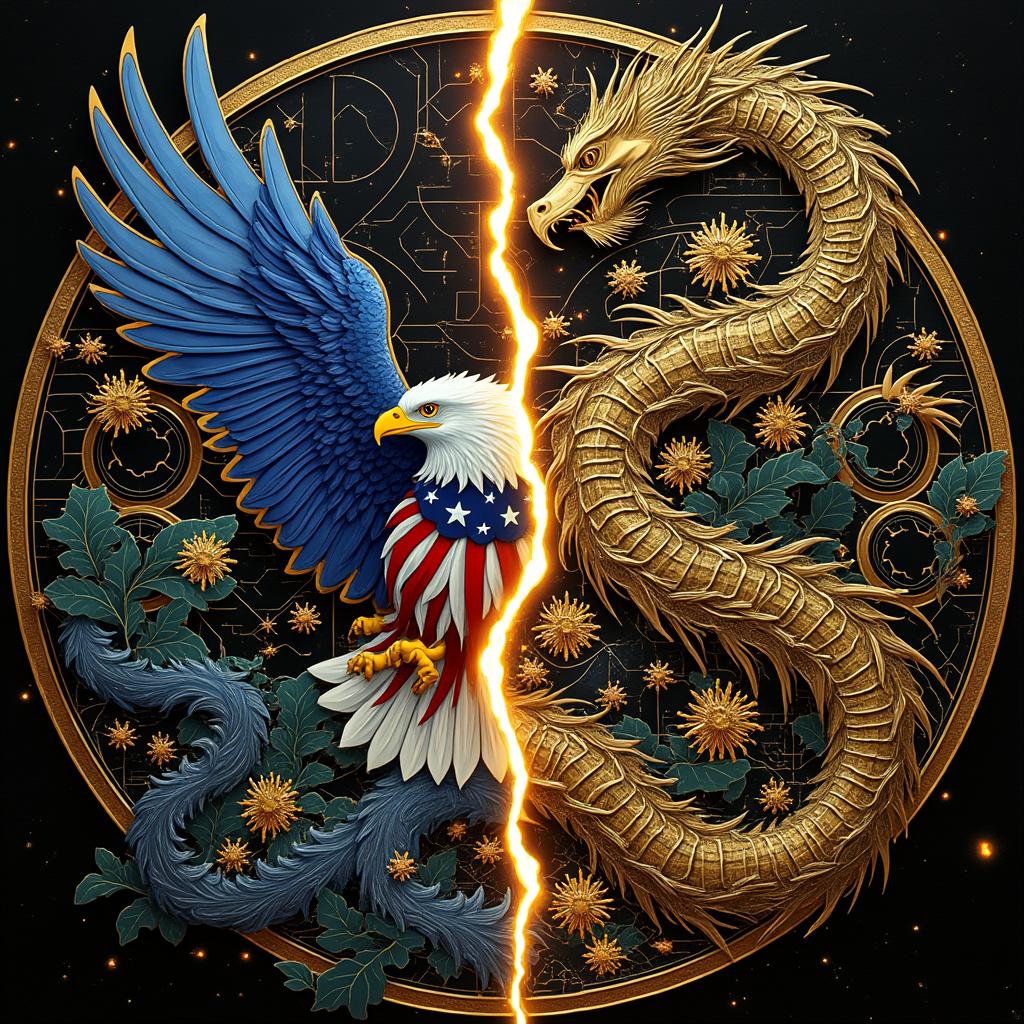
In a striking twist of technological geopolitics, China has rejected Nvidia's H200 AI chips despite US approval for their sale. This move exposes a miscalculation in America's AI chip export strategy and highlights a growing disconnect between policy goals and outcomes.
White House AI and Crypto Czar David Sacks argues that China has seen through Washington's calibrated approach and is accelerating domestic semiconductor development. Intended as a controlled concession, the policy has instead spurred China's technological independence, with major implications for global AI competition and US interests.
The Strategy Behind H200 Approval
Since 2022, the US has imposed strict export controls on advanced AI chips like Nvidia's H100 due to national security concerns over China's military and AI advances.
The H200, a less powerful variant, was approved as a middle ground: allowing US firms market access while preserving a tech edge. This balanced commercial and security aims with a targeted allowance rather than a total ban.
But as Sacks points out, China views it as a ploy to limit its progress while sustaining Nvidia's sales. Beijing has rejected it, pivoting to homegrown options.
Unintended Consequences: Boosting Self-Reliance
US restrictions over three years have fueled China's semiconductor industry, driving investments by Huawei and SMIC in domestic AI chips.
Sacks criticizes this as counterproductive, stating that "three years of overbroad export controls drove foreign competitors to pursue their own AI chips" and cost US taxpayers billions. This fuels debate on whether controls enhance security or hasten decoupling.
The irony: efforts to curb China's AI growth have instead fortified its commitment to indigenous tech, backed by vast resources.
Mixed Market Signals
The story has nuances. Days before Sacks' remarks, ByteDance and Alibaba inquired about H200 purchases, suggesting no uniform rejection.
This reflects a diverse Chinese tech sector: some chase local solutions, others hedge with foreign chips. Even so, the trend favors homegrown development, with inquiries likely tactical rather than a full embrace of US suppliers.
Broader Implications for Global AI
China's H200 snub marks a shift from US dominance reliant on others' dependence.
Key consequences:
For US Firms: Nvidia faces a contracting China market amid booming local AI demand, with improving Chinese chips threatening revenues.
For US Security: Controls aimed at protection may backfire by enabling unchecked Chinese advances, reducing US leverage.
For Supply Chains: Bifurcation into US- and China-led ecosystems looms, raising costs but diluting single-nation influence.
Lessons for Tech Policy
Export controls are blunt tools that slow rivals short-term but spur long-term alternatives.
Superior policies prioritize US innovation over restrictions, which often accelerate decoupling.
The H200 case shows how perceived motives shape responses: China rejects perceived subordination, doubling down on self-reliance.
Conclusion: A New Strategic Reality
China's H200 rejection signals realignment in AI rivalry. US controls, meant to sustain leadership, have catalyzed Beijing's independence.
Policymakers must reassess if restrictions still work or now hasten unwanted outcomes. As Chinese chips advance, US leverage wanes.
Ultimately, AI leadership hinges on superior US innovation, not barriers alone—lest controls keep undermining American goals.