
Introduction: A Race to the Stars with High Stakes
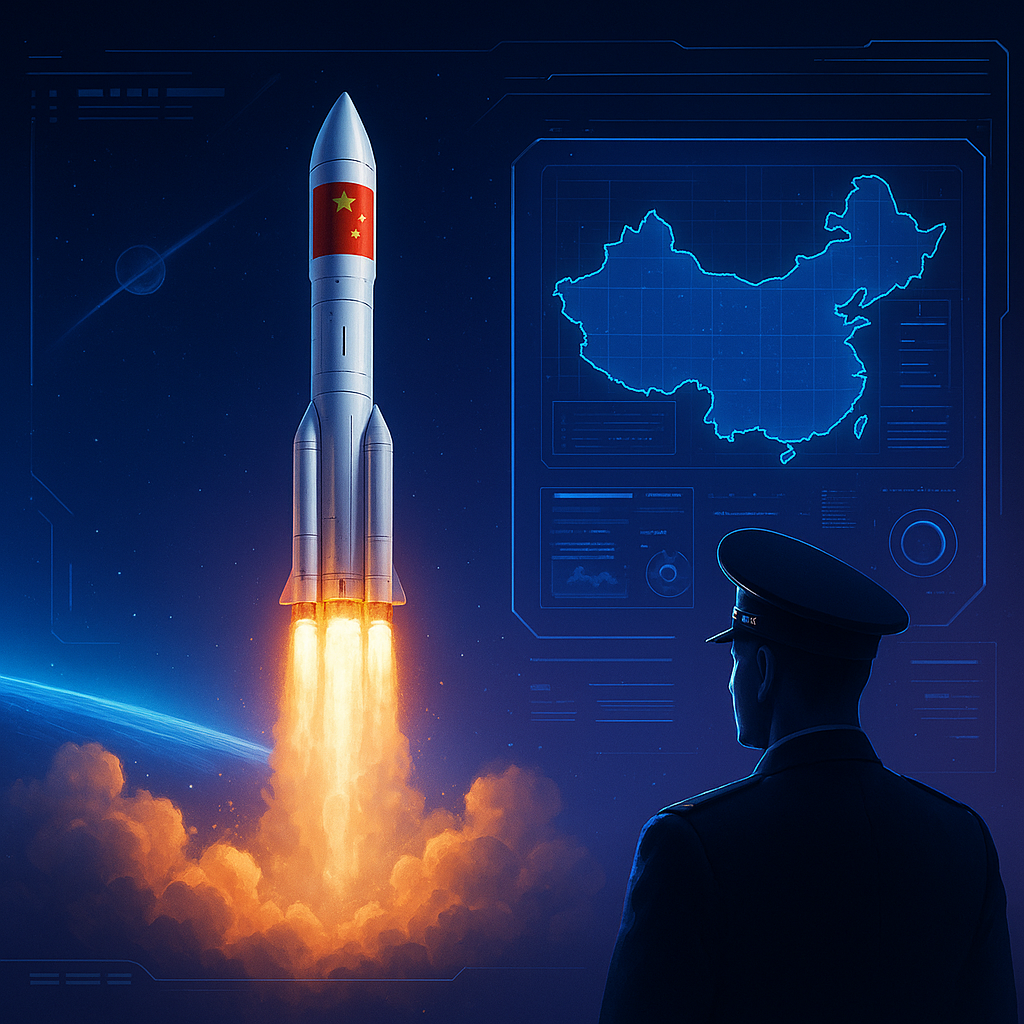
As I sift through the latest reports on global military dynamics, one trend stands out like a satellite streaking across a midnight sky: China's blistering pace in space technology. It's not just about launching more rockets or deploying constellations of satellites—it's about reshaping the invisible battlefield that underpins modern warfare. A top US Space Force general recently put it bluntly: "It's concerning just how fast China is closing the gap on the space tech that backs modern armies." This isn't hyperbole; it's a wake-up call from the front lines of strategic competition. In an era where GPS guides missiles, satellites beam intelligence, and space denial could cripple entire operations, the US's long-held dominance is under siege. Drawing from recent analyses and official statements, let's dive into why this shift matters and what it means for the future of global power.
The Speed of China's Space Ascendancy
China's space program has evolved from a fledgling effort in the early 2000s to a formidable force today, and the numbers tell a compelling story. Over the past decade, Beijing has dramatically ramped up satellite launches, deploying hundreds of assets that enhance communication, navigation, and intelligence, surveillance, and reconnaissance (ISR)—the backbone of any contemporary military. According to reports from Business Insider and AOL, this isn't incremental progress; it's a sprint. China now boasts a growing network of military satellites that rival those of the US in coverage and resilience, enabling real-time data for everything from troop movements to precision strikes.
But the real edge comes in counter-space capabilities—weapons designed to disrupt or destroy an adversary's orbital assets. China has invested heavily in direct-ascent anti-satellite (ASAT) missiles, which can reach low-Earth orbit targets, as well as co-orbital systems like satellites that can maneuver to interfere with others. Directed-energy weapons, such as ground-based lasers, are also in development, potentially blinding or frying satellite sensors. A peer-reviewed analysis highlights that these tools could "threaten US space systems" in a conflict, turning the heavens into a contested domain. I've followed space militarization for years, and what's striking is the dual-track strategy: China builds its own space infrastructure while simultaneously creating ways to neutralize ours. This asymmetry isn't just concerning; it's a direct challenge to the US's operational freedom.
The RAND Corporation's recent 'scorecard' project underscores this trajectory. While the US still leads in overall military hardware and experience, China's relative capabilities have surged across key areas like space-based ISR and electronic warfare. In some metrics, the gap has narrowed by over 20% in just five years. As an expert in defense journalism, I see this as confirmation of a broader pattern: China isn't copying the US playbook; it's rewriting it with an emphasis on speed and scale.
Voices from the Vanguard: US Military Perspectives
The alarm bells aren't ringing in think tanks alone—they're echoing through the Pentagon. Lt. Gen. Michael Guetlein, a key figure in the US Space Force, voiced this unease in recent interviews, emphasizing how China's advancements erode the technological edges that have kept American forces supreme for decades. "The speed at which they're closing the gap is concerning," he said, pointing to the integration of space tech into every facet of modern armies, from drone swarms to hypersonic weapons.
This isn't isolated rhetoric. The Space Force, established in 2019 partly in response to such threats, is now prioritizing resilience and deterrence. Experts note a strategic nuance, though: China's own growing reliance on space creates mutual vulnerabilities. As one academic paper astutely observes, "its increasing space dependence encourages restraint in the use of these capabilities." In other words, Beijing might hesitate to pull the trigger on ASAT weapons if it risks its own satellites— a classic case of deterrence through interdependence. From my vantage point, this mutual assured disruption mirrors the nuclear balance of the Cold War, but in orbit.
Yet, optimism tempers the concern. US officials stress ongoing investments in next-gen systems, like proliferated low-Earth orbit constellations (think Starlink for the military) and advanced countermeasures. Still, the general's words linger: the pace of change demands urgency. If China achieves parity, it could level the playing field in potential flashpoints like the South China Sea or Taiwan Strait, where space dominance would dictate outcomes.
Broader Ripples: Erosion Across Military Domains
This space squeeze isn't happening in a vacuum—it's part of a larger narrative of eroding US advantages. Take airpower, for instance. A former US fighter pilot recently warned that "America's airpower edge is slipping," citing China's stealth jets and integrated air defenses that challenge F-35 supremacy. Similarly, the US Army faces a "looming problem" with managing an explosion of drones—too many technologies, not enough integration—highlighting the scramble to adapt to peer competitors.
These threads weave together a tapestry of strategic competition. Space isn't just another domain; it's the enabler for all others. Disrupt satellite comms, and your drones go blind; jam GPS, and your precision munitions miss. China's holistic approach—combining space buildup with cyber and hypersonic threats—amplifies this. RAND's analysis shows improvements in over a dozen operational areas, from anti-access/area denial to long-range fires. As someone who's covered these shifts, I worry that without accelerated innovation, the US risks a multi-domain lag.
Related developments, like the X-59 supersonic test jet's recent flight, signal America's pushback. But they're bandaids on a deeper wound: bureaucratic inertia and budget constraints versus China's state-directed efficiency.
Conclusion: Charting a Course Through the Stars
The closing gap in space tech isn't just a technical footnote—it's a pivot point for global security. As China hurtles toward parity, the US must confront uncomfortable truths: dominance isn't eternal, and complacency is the real enemy. Future implications are profound. In a Taiwan crisis, for example, space denial could tip the scales, forcing reliance on vulnerable alternatives. Yet, this rivalry could spur innovation, much like the Space Race birthed the internet. The key lies in diplomacy alongside deterrence—fostering norms against weaponizing space while bolstering defenses. If history teaches us anything, it's that those who master the high ground win the war. The stars are calling; the question is, who will answer first?
Brief Summary
This article explores a US Space Force general's concerns over China's rapid advancements in space technologies and counter-space weapons, which threaten America's military edge. Drawing on RAND analyses and expert insights, it highlights the strategic implications for modern warfare and broader erosions in US advantages across domains. Ultimately, it calls for urgent innovation and balanced deterrence to navigate this new orbital arms race.