
Introduction: A New Era of Celestial Competition
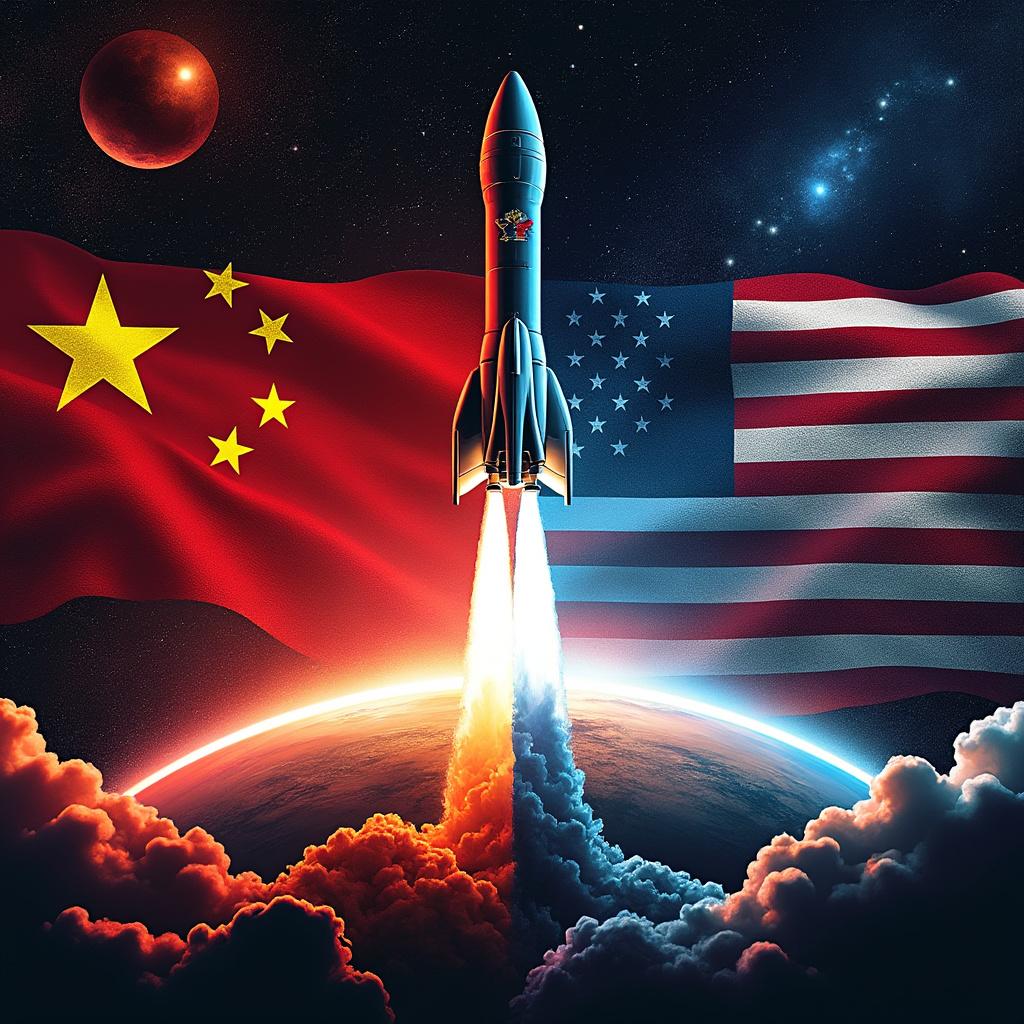
Beijing isn't just playing catch-up in space—it's methodically reshaping the global space order. The Center for Security and Emerging Technology (CSET) recently released a comprehensive report, 'China's Space Progress Report,' tracking Beijing's advancement against its ambitious 2021 Space Perspective goals across seven key areas. From human spaceflight to deep-space probes, China's progress has been relentless, fueled by a unified national strategy that contrasts sharply with the U.S.'s more fragmented approach.
Yet amid this ascent, operational challenges like a crew capsule crisis on the Tiangong space station and space debris incidents reveal vulnerabilities that could affect timelines. Within 5-10 years, experts warn, China could challenge U.S. dominance in space, with ripple effects on national security, economics, and lunar resource rights.
Systematic Progress: Tracking the 2021 Goals
China's 2021 Space Perspective isn't mere rhetoric—it's a blueprint for space leadership, integrating military, economic, and diplomatic aims. CSET's analysis, drawing from open-source evidence, shows Beijing advancing systematically across seven domains: human spaceflight, lunar and planetary exploration, satellite navigation, Earth observation, communications, microgravity science, and space infrastructure.
In human spaceflight, China's Tiangong space station is fully operational, hosting crews for months-long missions. The BeiDou satellite navigation network now rivals GPS, providing global positioning with military-grade precision. Lunar efforts are accelerating, with the Chang'e-6 mission successfully returning far-side Moon samples in 2024—a feat unmatched by any other nation. Deep-space ambitions include the Tianwen-1 Mars rover and upcoming Martian sample-return plans.
This progress reflects careful orchestration. Unlike the U.S., where NASA coordinates with private companies like SpaceX, China's program benefits from state-directed infrastructure—massive launch sites like Wenchang and production facilities manufacturing rockets at scale. According to CSIS and USCC reports, this coordination enables steady gains that are now accelerating. The result is a space apparatus that advances Beijing's broader strategic objectives, from intelligence gathering to economic leverage.
Operational Vulnerabilities: Challenges in the Program
Progress hasn't been without setbacks. Recent incidents expose near-term challenges that test China's space program resilience. SpaceNews reported a temporary emergency launch gap for Tiangong after a Shenzhou crew capsule issue left the station without a quick escape vehicle for several months, potentially endangering astronauts during emergencies.
Space debris has compounded these challenges. Orbital debris forced delays in astronaut returns, extending crew stays beyond original plans. While Chinese officials confirmed the astronauts were in good condition, these events underscore a growing debris problem—partly exacerbated by China's prolific launch cadence.
These incidents reflect the challenges of scaling a space station amid rapid expansion. China's compressed timeline amplifies operational risks. Additionally, U.S. export controls on advanced semiconductors, including Nvidia's H200 processors, complicate China's development of AI systems for autonomous space operations—such as debris-avoidance algorithms and rover navigation—potentially affecting capabilities in critical areas.
Lunar Ambitions and Geopolitical Stakes: The Race to 2030
China has set its sights on the Moon and Mars with ambitious timelines. The 2030 target for taikonaut lunar landings directly challenges NASA's Artemis program, which aims for U.S. astronauts on the lunar surface by the mid-to-late 2020s. Beijing's International Lunar Research Station (ILRS), developed in partnership with Russia, could establish presence on the lunar south pole—a region rich in water ice for fuel and life support.
Martian plans are equally ambitious: a sample-return mission targeted for the early 2030s, following Tianwen-3. Expert assessments from CSIS and the U.S.-China Economic and Security Review Commission (USCC) frame this as a national security consideration. Space capabilities extend beyond exploration to dual-use technologies for reconnaissance, counterspace operations, and resource utilization.
With U.S. policies including semiconductor export restrictions affecting China's technological development, the competition intensifies. The infrastructure buildout documented by CSIS supports capabilities that could shift leadership dynamics in space over the coming decade.
Conclusion: Implications for a Contested Domain
China's space advances warrant careful attention from U.S. policymakers. While Beijing achieves milestones against its 2021 goals, operational challenges like Tiangong's launch gap demonstrate the difficulties inherent in ambitious space programs. Yet with lunar landing targets set for 2030 and expert assessments suggesting potential shifts in space leadership within 5-10 years, strategic responses are necessary.
Policymakers face decisions about Artemis program funding, public-private partnerships, and export control policies. The competition for space leadership will shape not only technological capabilities but also the governance frameworks for space resources and activities in the decades ahead.
Word count: 897