
Introduction
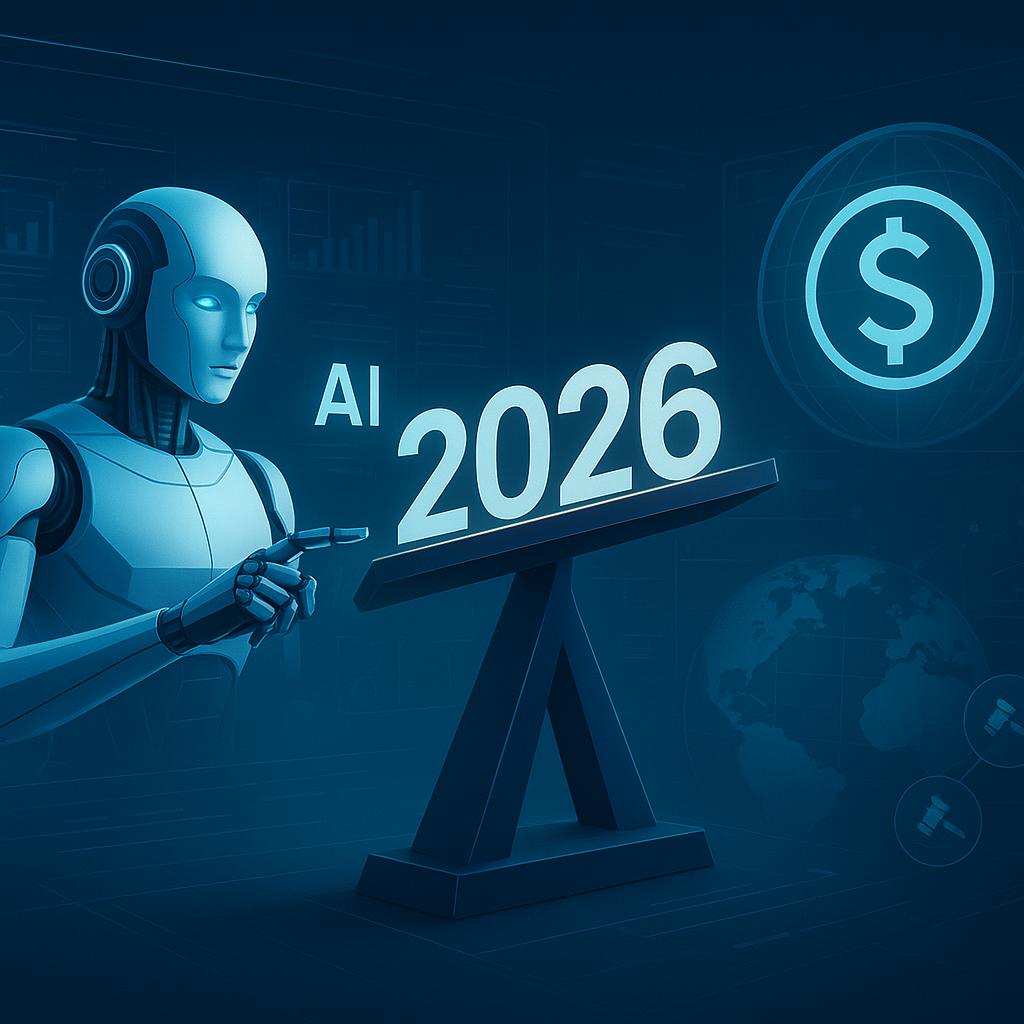
As a fintech analyst with over a decade tracking the pulse of financial innovation, I've witnessed cycles of hype and consolidation. But 2026 feels different—a true crossroads where technological breakthroughs collide with regulatory fragmentation, potentially redefining how money moves and decisions are made. Drawing from Finovate's latest white paper, 'Fintech at the Crossroads,' this article dissects the forces shaping the industry: agentic AI's rise, stablecoins' disruptive potential, and the paradox of converging tech amid diverging rules. For financial leaders and innovators, understanding these dynamics isn't optional; it's survival.
The Dawn of Agentic AI: From Tools to Autonomous Agents
At the heart of 2026's fintech evolution lies agentic AI, a leap beyond today's chatbots and predictive analytics. Unlike current systems that merely suggest actions, agentic AI operates with autonomy, executing trades, approving loans, or detecting fraud in real-time without constant human oversight. Finovate's research highlights this as a transformative shift, enabling financial services to scale decision-making at speeds unattainable by legacy models.
Consider the implications: in banking, agentic AI could autonomously manage portfolios, adapting to market volatility faster than any trader. Deloitte's 2026 banking outlook echoes this, noting that U.S. institutions must scale AI amid data fragmentation—a bottleneck where siloed legacy systems hinder model training. I've seen this firsthand in consultations with mid-sized banks, where integrating disparate data sources like core banking software and CRM platforms delays AI deployment by months.
Yet, this autonomy raises thorny questions. Who bears liability for an AI's erroneous trade? Finovate warns that as these systems proliferate, risk management frameworks will need overhauls, blending ethical AI governance with traditional compliance. For multinational firms, the challenge intensifies: an AI trained on U.S. data might falter under EU's stringent GDPR rules, underscoring the need for modular, jurisdiction-aware architectures.
Stablecoins and Digital Assets: Eroding Traditional Banking Foundations
No discussion of 2026 fintech is complete without stablecoins, the digital assets pegged to fiat currencies like the USD, poised to upend conventional banking. Finovate positions them as a 'defining feature,' capable of disrupting payment rails, remittances, and even central bank reserves. With transaction volumes surging—global stablecoin market cap exceeded $150 billion in 2023—these assets offer near-instant, low-cost transfers, bypassing intermediaries that charge hefty fees.
Deloitte identifies stablecoins as a macro headwind for banks, predicting they could siphon deposits and erode interest income. Imagine a world where consumers hold stablecoins in digital wallets for everyday spending, rendering branch visits obsolete. In emerging markets, this shift is already underway; platforms like Stellar and Circle's USDC facilitate cross-border payments at fractions of SWIFT costs.
However, fragmentation looms large. While the U.S. explores stablecoin frameworks via the Clarity for Payment Stablecoins Act, the EU's MiCA regulation imposes rigorous licensing, and Asia's approaches vary wildly—Singapore embraces innovation, while China bans crypto outright. This creates arbitrage for fintechs but compliance nightmares for globals like PayPal or Revolut, who must tailor operations per market. As an expert, I foresee stablecoins accelerating DeFi (decentralized finance), but only if regulators harmonize—or risk a shadow banking system thriving in regulatory gray zones.
The Paradox of Convergence and Divergence: A Multi-Speed Financial World
Finovate's core thesis is this paradox: technological convergence accelerates innovation, while regulatory divergence fragments the ecosystem. AI, blockchain, and digital assets are merging—think AI-orchestrated blockchain settlements for stablecoin trades—driving efficiency gains of up to 40% in transaction processing, per industry benchmarks.
Yet, regulations are pulling in opposite directions. The U.S. favors light-touch oversight to spur competition, the EU prioritizes consumer protection via DORA (Digital Operational Resilience Act), and Asia balances innovation with stability through sandboxes in Hong Kong and Dubai. This 'multi-speed' system, as Deloitte terms it, inflates costs: a fintech expanding to three markets might need triple the compliance teams.
Financial crime adds fuel to the fire. Finovate notes new vectors like AI-generated deepfakes enabling sophisticated fraud, complicating anti-money laundering (AML) efforts. Data fragmentation exacerbates this; banks' legacy systems can't feed unified datasets to AI-driven compliance tools, leading to blind spots. In my view, 2026 will demand hybrid solutions—global tech stacks with localized compliance layers—to thrive in this bifurcated landscape.
Related developments amplify the tension. Agentic AI's advance, per ongoing pilots at firms like JPMorgan, promises autonomous fraud detection but invites regulatory scrutiny on algorithmic bias. Stablecoin adoption, fragmented by jurisdiction, fosters opportunities like tokenized real-world assets but heightens illicit finance risks. Overall, innovation outpaces harmonization, forcing firms to invest in agile compliance tech, such as RegTech platforms using AI for cross-border monitoring.
Conclusion: Charting a Course Through Uncertainty
Looking ahead, 2026 isn't just a milestone; it's a litmus test for fintech's resilience. Institutions that master agentic AI and stablecoins while navigating regulatory rifts will lead the charge, potentially capturing trillions in value from streamlined services. But laggards risk obsolescence, bogged down by compliance costs and tech silos. As Finovate and Deloitte converge in their warnings, the interconnected challenges—macro headwinds, data woes, and crime prevention—demand integrated strategies. Policymakers must prioritize global dialogues, perhaps through forums like the G20, to bridge divergences without stifling progress. For innovators, the message is clear: adapt boldly, comply smartly, and view 2026 not as a barrier, but as the forge of finance's future.
Brief Summary
This article explores 2026's fintech landscape, spotlighting agentic AI's autonomy, stablecoins' banking disruptions, and the clash of technological convergence with regulatory divergence. Drawing on Finovate and Deloitte insights, it highlights opportunities and challenges for global players. Ultimately, success hinges on agile adaptation to this paradoxical environment.