
```json
{
"headline": "Ford's Strategic Pivot: Why Hybrids and Trucks Trump Pure EV Ambitions",
"summary": "Ford Motor Company is fundamentally reshaping its electrification strategy, prioritizing profitable growth through hybrids, extended-range electric vehicles, trucks, and battery storage rather than aggressive pure EV expansion. The company is discontinuing the fully electric F-150 Lightning in favor of a next-generation EREV variant with 700+ miles of range, while simultaneously developing a Universal EV Platform for affordable electric vehicles and launching a battery storage business for data centers and power grids. This pragmatic shift reflects market realities: slower-than-expected EV adoption, manufacturing cost constraints, and genuine customer demand for diverse powertrain options.",
"content": "# Ford's Strategic Pivot: Why Hybrids and Trucks Trump Pure EV Ambitions\n\nIn December 2025, Ford Motor Company announced a fundamental shift in its electrification strategy. Rather than pursuing aggressive pure electric vehicle expansion, the company is recalibrating to prioritize profitable growth through a diversified powertrain approach emphasizing hybrids, extended-range electric vehicles, trucks, and battery storage. This move reflects a pragmatic response to market realities that industry observers have anticipated for months.\n\nThe announcement signals more than a tactical adjustment—it represents a philosophical pivot acknowledging customer preferences, economic constraints, and the complex reality of automotive electrification. Several critical insights emerge about the future of transportation and Ford's competitive positioning.\n\n## The Reality Check: Why Pure EV Expansion Isn't Working\n\nFor years, automotive executives promoted an inevitable, rapid transition to fully electric vehicles. However, Ford's strategic recalibration reflects a sobering reality: widespread EV adoption follows a far more complex path than initially anticipated.\n\nThe company is taking EV-related charges and scaling back aggressive pure EV plans, acknowledging that fully electric vehicle adoption has been slower than expected. Multiple factors contribute to this slowdown: high upfront costs remain a significant barrier for consumers, charging infrastructure development lags in critical markets, and consumer concerns about range and practicality persist despite technological improvements.\n\nFord's decision to discontinue the fully electric F-150 Lightning exemplifies this challenge. While the truck represented cutting-edge electric technology, it couldn't overcome the fundamental tension between cost, range, and the practical demands of truck owners who depend on their vehicles for work.\n\nCritically, Ford isn't abandoning electrification—the company is being honest about the timeline and the role different technologies will play in the transition.\n\n## The Hybrid Renaissance: Meeting Market Demand\n\nFord's renewed emphasis on hybrids isn't a retreat from environmental responsibility; it's a recognition that the market demands choice and practicality. The company plans to offer a comprehensive range of hybrids that complement efficient gasoline engines, providing customers with options that deliver real-world benefits without perceived compromises associated with pure electric vehicles.\n\nHybrids function as a \"bridge technology\"—they deliver improved fuel efficiency and reduced emissions while maintaining the range, refueling speed, and practicality many consumers value. Ford's strategy aligns with broader industry trends. Competitors including General Motors and Stellantis are similarly moderating their EV ambitions and increasing hybrid focus.\n\nThe hybrid strategy holds particular significance for trucks and SUVs, where Ford maintains dominant market position. These vehicles often serve commercial and work purposes where range and reliability are paramount. By offering hybrid versions of popular truck models, Ford can improve fuel economy and reduce emissions while preserving the performance characteristics customers expect.\n\nIndustry analysts note that Ford expects greater sales volume from hybrids and extended-range EVs incorporating gas power, suggesting this represents genuine market demand rather than a temporary measure.\n\n## The Extended-Range Revolution: Next-Generation F-150 Lightning\n\nWhile Ford is discontinuing the fully electric F-150 Lightning, the company isn't abandoning the nameplate. Instead, it's introducing a next-generation F-150 Lightning leveraging Extended Range Electric Vehicle (EREV) technology—a sophisticated approach combining electric and gas power for optimal performance.\n\nThe upcoming F-150 Lightning EREV promises over 700 miles of range, electric torque delivery, and powerful towing capability. This technological solution elegantly addresses a core limitation: customers gain the instant torque and efficiency benefits of electric motors combined with the extended range and refueling convenience of gasoline engines.\n\nThis approach solves the fundamental constraint limiting pure EV truck adoption. Truck owners often require vehicles capable of extended trips and heavy towing without charging infrastructure anxiety. EREV technology addresses this problem directly, allowing Ford to offer a truck combining the best attributes of both powertrains.\n\nThe next-generation F-150 Lightning demonstrates that Ford isn't abandoning innovation or electrification—it's pursuing a more nuanced path acknowledging real-world constraints and customer needs.\n\n## Beyond Automotive: The Battery Storage Opportunity\n\nPerhaps the most intriguing aspect of Ford's strategic recalibration involves a new business venture: battery energy storage for data centers and power grids. This initiative represents significant expansion beyond traditional automotive manufacturing.\n\nAs renewable energy adoption accelerates globally, the demand for reliable, scalable battery storage solutions becomes increasingly critical. Data centers and power grids require sophisticated storage systems to manage intermittent renewable energy generation and ensure grid stability. Ford's automotive battery expertise positions the company to serve this growing market.\n\nThis diversification strategy opens entirely new revenue streams beyond vehicle sales, potentially offsetting automotive sector challenges. It reflects sophisticated understanding of how battery technology will shape multiple industries beyond transportation.\n\nThe battery storage initiative also provides strategic flexibility. If automotive EV adoption continues to lag, Ford has developed alternative applications for battery technology and manufacturing capabilities—a form of risk management demonstrating mature strategic thinking.\n\n## The Universal EV Platform: Achieving Scale Efficiency\n\nFord's Universal EV Platform represents another key strategic element. By developing a flexible platform underpinning multiple electric vehicle models, Ford aims to achieve economies of scale while offering customers choice and affordability.\n\nThis approach contrasts with competitors who have developed multiple distinct EV platforms. By consolidating on universal architecture, Ford can reduce development costs, simplify manufacturing, and ultimately offer more affordable electric vehicles—directly addressing the primary barrier to EV adoption: cost.\n\nThe affordability emphasis is crucial. For electric vehicles to achieve mainstream adoption, they must be accessible to middle-income consumers, not just affluent early adopters. Ford's focus on developing affordable EVs alongside hybrids and extended-range vehicles reflects understanding of this imperative.\n\n## What This Means for the Industry and Consumers\n\nFord's strategic recalibration signals that the automotive industry is entering a more mature electrification phase. Aggressive, timeline-driven EV mandates are giving way to pragmatic assessments of market readiness, consumer preferences, and technological feasibility.\n\nFor consumers, this should mean expanded choice. Rather than forcing a binary choice between traditional gasoline vehicles and fully electric options, manufacturers will increasingly offer hybrids, extended-range vehicles, and pure EVs—each optimized for different use cases and preferences.\n\nFor the industry, this represents a recalibration toward profitability. Pure EV expansion, while strategically important, has proven unprofitable for many manufacturers. By shifting capital toward high-demand trucks and hybrids leveraging existing expertise and manufacturing capabilities, Ford positions itself for sustainable profitability during the transition period.\n\nThe strategy also reflects broader policy uncertainties. EV incentives and mandates remain subject to political change, making aggressive pure EV bets increasingly risky. A diversified powertrain strategy provides resilience against policy shifts.\n\n## Conclusion: A Pragmatic Path Forward\n\nFord's strategic announcement represents a maturation of industry thinking about electrification. Rather than viewing the transition as a binary shift from gasoline to electric, the company recognizes that the path forward involves multiple technologies serving different customer needs and use cases.\n\nThis approach—emphasizing hybrids, extended-range vehicles, affordable EVs, trucks, and battery storage—reflects genuine customer demand, economic realities, and technological constraints. It's a strategy built on listening to customers and responding to market signals rather than pursuing ideological commitments to pure electrification.\n\nWhile some may view this as retreating from environmental ambitions, it might actually represent a more effective path to meaningful emissions reductions. A hybrid achieving 40% better fuel economy and selling in volume may deliver greater environmental benefits than a pure EV remaining unaffordable and impractical for many consumers.\n\nAs the automotive industry continues its transformation, expect similar strategic recalibrations from competitors. The future of transportation will likely be more diverse, more pragmatic, and ultimately more successful than the pure EV vision that dominated industry discourse just a few years ago.\n\nFord's pivot demonstrates that true
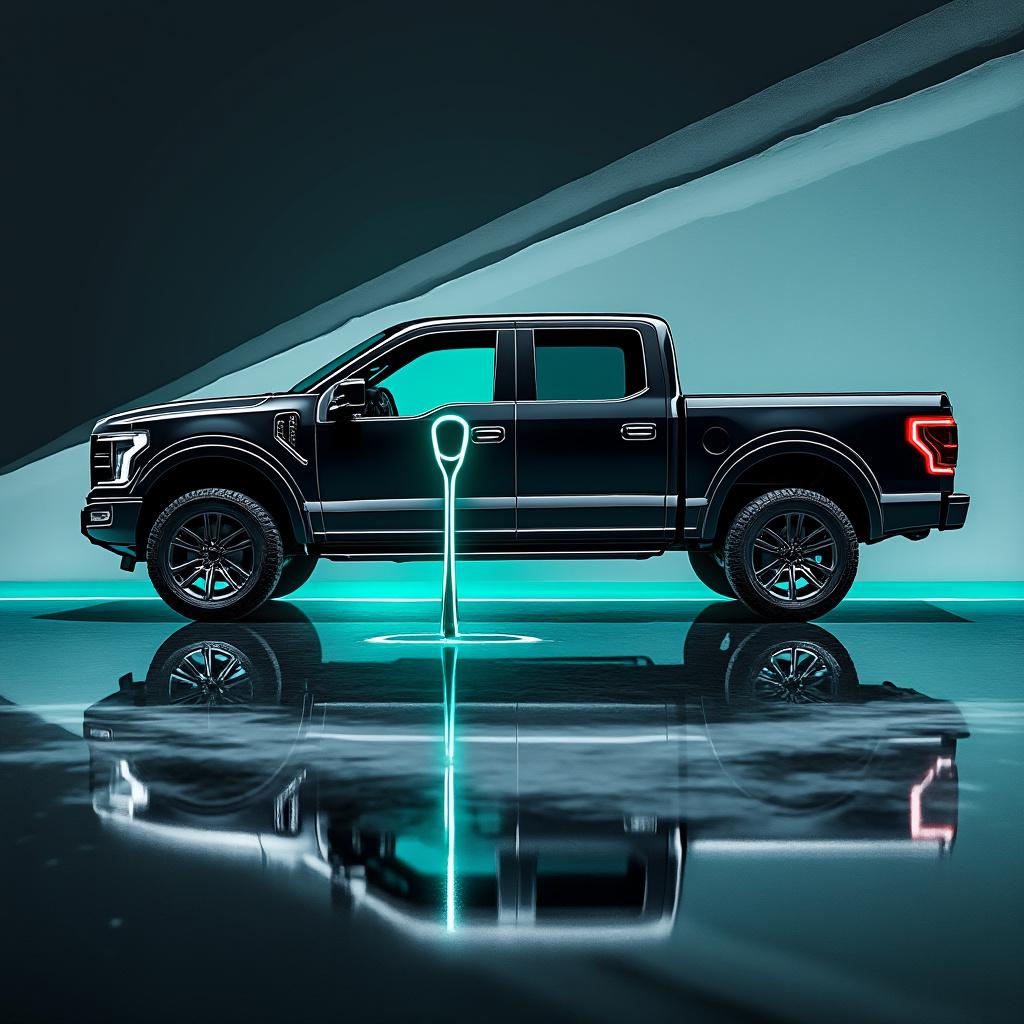
Ford's Bold Pivot: Why Hybrids and Trucks Beat Pure EVs
Ford Motor Company is recalibrating its electrification strategy to prioritize profitable growth through hybrids, extended-range electric vehicles, trucks, and battery storage rather than aggressive pure EV expansion. The company is ending production of the fully electric F-150 Lightning in favor of a next-generation EREV version with 700+ mile range, while developing a Universal EV Platform for affordable electric vehicles and launching a battery storage business for data centers and power grids. This pragmatic shift reflects slower-than-expected EV adoption, cost constraints, and customer demand for diverse powertrain options.
Sources
- https://www.fromtheroad.ford.com/us/en/articles/2025/ford-reinvests-trucks-hybrids-affordable-electric-vehicles
- https://www.bastillepost.com/global/article/5457349-ford-follows-customers-to-drive-profitable-growth-reinvests-in-trucks-hybrids-affordable-evs-battery-storage-takes-ev-related-charges
- https://www.fromtheroad.ford.com/us/en/articles/2025/next-gen-f-150-lightning-extended-range-electric-vehicle
- https://www.streetinsider.com/Corporate+News/Ford+shifts+strategy+to+focus+on+trucks%2C+hybrids+and+battery+storage/25740669.html
- https://gigazine.net/gsc_news/en/20251216-ford-reinvests-ev-battery-storage/