Introduction: A Game-Changing Hire in the AI-Robotics Fusion
As someone who's been tracking the intersection of AI and robotics for over a decade, I can tell you that the latest move from Google DeepMind has my full attention. Imagine an AI model not just crunching data in the cloud, but directly commanding a fleet of humanoid robots in a warehouse or on a factory floor. That's the vision DeepMind's chief, Demis Hassabis, is chasing, and to make it real, they've poached Aaron Saunders—the former CTO of robotics powerhouse Boston Dynamics—as their new Vice President of Hardware Engineering. This isn't just a talent grab; it's a bold statement that Google is ready to bridge the gap between ethereal AI algorithms and gritty, physical machines. Drawing from reports in WIRED and other sources, let's dive into what this means for the future of intelligent robotics.
The Strategic Power Move: Bringing Boston Dynamics Expertise In-House
Aaron Saunders isn't your average engineer. At Boston Dynamics, he was the mastermind behind the company's iconic robots like Spot, the agile quadruped that dances and navigates rough terrain, and Atlas, the humanoid that's been flipping and parkouring its way into viral videos. As CTO, Saunders oversaw the integration of advanced mechanics with real-world AI applications, turning sci-fi concepts into deployable tech. Now, at DeepMind, he's tasked with scaling that hardware prowess to Google's AI empire.
This hire signals DeepMind's pivot from software-centric AI to a full-stack robotics powerhouse. Google's already got a leg up with its acquisition of DeepMind in 2014 and the robotics assets from Boston Dynamics (which it sold to Hyundai in 2021 but clearly learned from). But Saunders' arrival is the missing piece: practical engineering know-how to make AI talk to hardware seamlessly. As Hassabis envisions, DeepMind's Gemini AI model could evolve into an 'operating system' for robots—think of it like Android for phones, but for bots. Instead of siloed systems, Gemini would orchestrate sensors, actuators, and decision-making in real time, enabling robots to learn, adapt, and collaborate on the fly.
From my perspective as an observer of tech mergers, this is Google's way of avoiding the pitfalls that have plagued other AI firms. Remember how early self-driving car projects stalled due to hardware-AI mismatches? DeepMind is learning those lessons early, using Saunders to ensure their robots aren't just smart on paper but robust in the physical world.
Gemini as the Brain: Envisioning an AI OS for Tomorrow's Robots
At the heart of this push is Gemini, DeepMind's multimodal AI that's already impressing with its ability to handle text, images, and code. Hassabis' bold claim—that Gemini will become an operating system for physical robots—implies a unified platform where AI doesn't just process inputs but directly controls outputs like movement and manipulation. This is a leap from current robotics, where AI often acts as a bolt-on feature rather than the core OS.
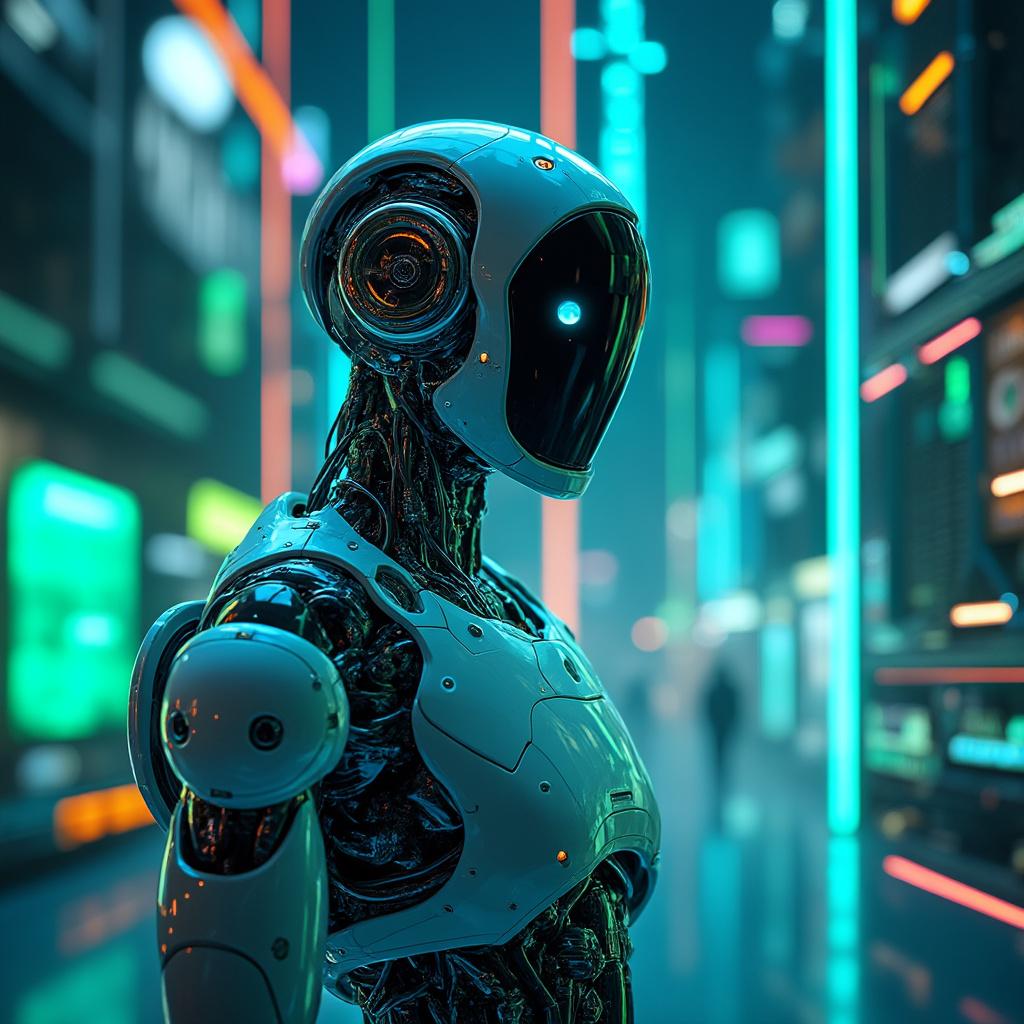
Picture this: A warehouse robot powered by Gemini could anticipate a worker's needs, reroute itself around obstacles using real-time environmental data, and even self-diagnose mechanical issues. Saunders' role will be pivotal here, blending Boston Dynamics' hardware innovations—like lightweight exoskeletons and energy-efficient locomotion—with Gemini's predictive intelligence. Industry experts I've spoken with highlight how this combo could slash development times for robotic systems, making them more affordable and scalable.
This vision isn't pie-in-the-sky. It's rooted in DeepMind's track record with projects like AlphaFold for protein folding and their work on reinforcement learning, which mimics how robots 'train' through trial and error. By integrating hardware engineering from the ground up, Google aims to create robots that are as intuitive and versatile as their software counterparts, potentially disrupting sectors from logistics to elder care.
Broader Industry Shifts: Talent Wars and the Rise of AI-Driven Manufacturing
This hire doesn't happen in a vacuum. The AI landscape is in flux, with talent migrating like never before. Just look at Meta, where Chief AI Scientist Yann LeCun departed after 12 years to launch his own startup— a move that underscores the hunger for independent innovation amid Big Tech's dominance. Google's poaching of Saunders fits this pattern, positioning DeepMind against rivals like OpenAI (with its robotics ambitions via Figure AI) and Tesla's Optimus project.
Zooming out, this aligns with exploding trends in AI-enabled manufacturing. As noted in recent analyses from StartupNews.fyi, companies are using AI for 'digital twins'—virtual replicas of physical systems—to optimize production lines. DeepMind's robotics push could supercharge this, enabling factories where AI robots handle everything from assembly to quality control. It's a convergence that's already boosting efficiency: McKinsey estimates AI could add $3.7 trillion to manufacturing by 2030.
Yet, challenges loom. Ethical concerns around job displacement, safety in human-robot interactions, and the energy demands of AI hardware are real. Saunders' experience at Boston Dynamics, where robots have been tested in industrial settings, will be crucial for addressing these. In a competitive field, Google's scale—its cloud infrastructure and data troves—gives it an edge, but execution will be key.
Conclusion: What This Means for the Future of Intelligent Machines
Google DeepMind's recruitment of Aaron Saunders isn't merely a headline—it's a harbinger of how AI will infiltrate the physical world. By fusing Gemini's AI smarts with battle-tested robotics hardware, they're laying the groundwork for a new era where machines don't just compute; they act, learn, and evolve alongside us. The implications are profound: faster innovation in automation, solutions to labor shortages, and perhaps even breakthroughs in fields like healthcare and exploration. But as an expert watching this space, I caution that success hinges on responsible development—balancing ambition with safeguards against misuse. If DeepMind pulls this off, we could see robots as commonplace as smartphones by the end of the decade, reshaping society in ways we're only beginning to grasp.
Brief Summary
Google DeepMind's hire of former Boston Dynamics CTO Aaron Saunders marks a strategic leap into AI-powered robotics, with Gemini poised to serve as an operating system for physical machines. This move bridges cutting-edge AI with hardware expertise amid industry talent shifts and manufacturing trends. Ultimately, it promises transformative impacts on automation and beyond, if navigated thoughtfully.