
Introduction
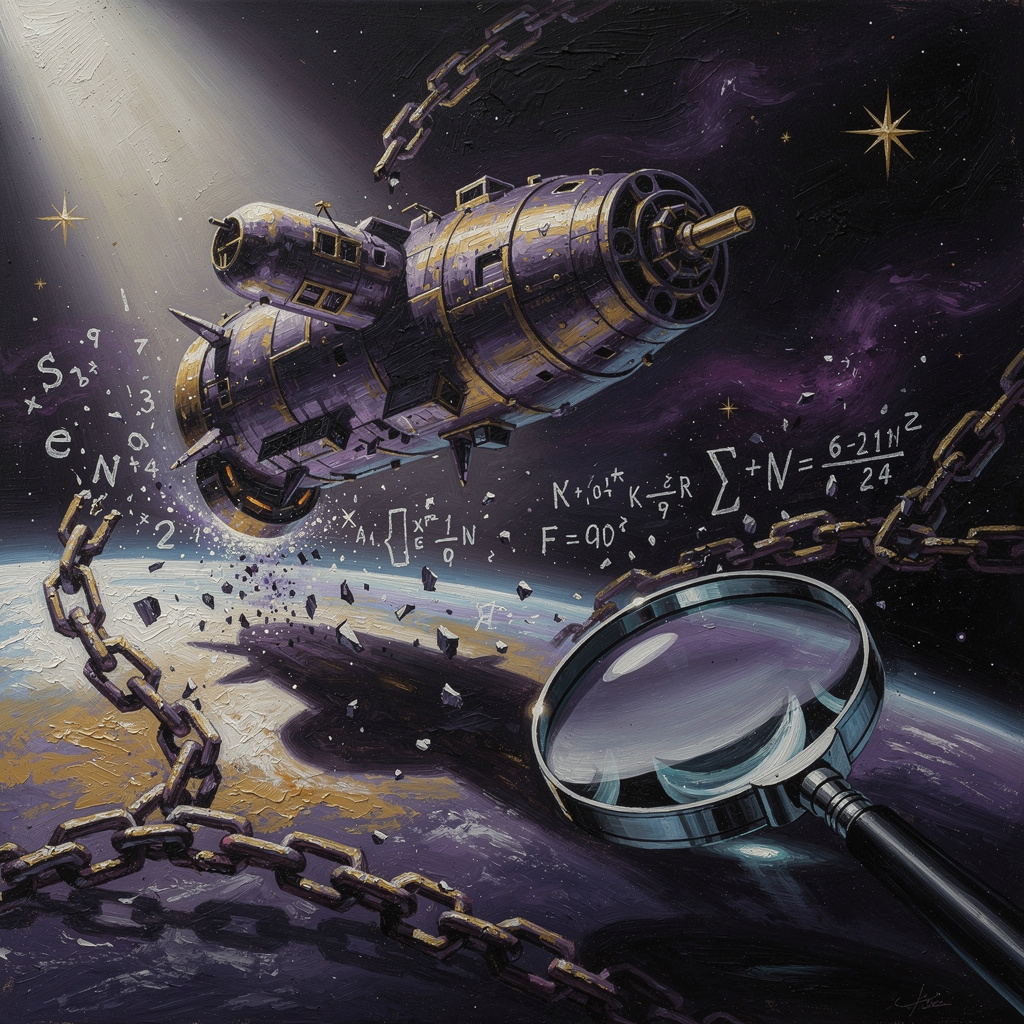
Imagine a spacecraft that needs no fuel, defies the fundamental laws of physics, and could revolutionize space exploration overnight. It sounds like science fiction—and that's precisely the problem. Recently, claims from a former NASA engineer about a propellantless propulsion system capable of overcoming Earth's gravity have captured headlines and sparked excitement across social media and tech news outlets. Yet beneath the compelling narrative lies a cautionary tale about the gap between extraordinary claims and scientific verification.
As someone who has followed aerospace innovations and their intersection with popular media for years, I've learned that the most sensational breakthroughs often require the most rigorous scrutiny. This story exemplifies exactly why that principle matters.
The Claim: A "New Force" That Challenges Physics
Charles Buhler, identified as a former NASA engineer with experience at multiple aerospace firms, has announced what he calls the "Exodus Drive"—a device that allegedly generates thrust without propellant by leveraging electrostatic fields to create what he terms a "new force." According to reports, this system has supposedly been tested by experts and produces enough thrust to counteract Earth's gravity at sea level (9.8 m/s²)—an extraordinary achievement that would fundamentally challenge our understanding of physics.
The appeal of such a claim is undeniable. Conventional spaceflight is bound by the Tsiolkovsky rocket equation, which dictates that massive fuel loads are required to achieve escape velocity. A propellantless system would eliminate this constraint entirely, making space travel cheaper, faster, and dramatically more accessible. The potential applications span from satellite deployment to interplanetary missions—the implications are genuinely transformative.
But potential and proof are vastly different things.
The Missing Evidence: Why Skepticism Is Warranted
Here's where the story begins to unravel under scrutiny. Despite widespread media coverage across outlets including Popular Mechanics, WebProNews, AOL, and Reddit discussions, no independent verification, peer-reviewed research, or published technical data supports these claims. Notably absent are:
Primary technical documentation: No patents, peer-reviewed papers, or detailed specifications have been released for independent analysis. In legitimate aerospace breakthroughs, researchers typically publish findings in journals like Nature, Science, or specialized publications like the Journal of Propulsion and Power.
Named expert validation: While reports claim the system was "tested by experts," no independent scientists or engineers are quoted by name endorsing the technology. This is a critical red flag. Legitimate scientific breakthroughs come with named researchers willing to stake their reputations on the findings.
Reproducible results: No timeline for independent replication or testing has been announced. In physics, reproducibility is the cornerstone of legitimacy.
This pattern is disturbingly familiar to anyone who has tracked previous propulsion "breakthroughs." The EmDrive saga offers a cautionary parallel—a device that claimed to generate thrust without propellant through electromagnetic resonance, which attracted significant media attention and even some academic interest before facing debunking due to measurement errors and the absence of verified thrust generation.
The Media Amplification Problem
One particularly concerning aspect of this story is how it illustrates the media's tendency to amplify extraordinary claims without adequate skepticism. When Popular Mechanics—a publication with substantial credibility—reports on such a breakthrough, it lends legitimacy that the underlying evidence may not support. This story then spreads across social media platforms and news aggregators, with each repetition adding perceived authority through sheer volume of coverage.
Additionally, some sources in circulation appear tangential to the core claim, suggesting that misinformation or unrelated content is being grouped with the primary story. This muddies the information landscape and makes it harder for readers to distinguish verified information from speculation.
As a journalist and subject matter expert, I recognize this as a failure of the information ecosystem. Readers deserve clarity about what has been verified versus what remains speculative. Headlines should reflect this distinction, and media outlets should include prominent caveats about unverified claims.
What Would Legitimate Verification Look Like?
If Buhler's claims are genuine, certain steps would establish credibility:
Peer review: Submission to physics and engineering journals with full technical specifications and experimental methodology. The peer review process, while imperfect, remains the gold standard for scientific validation.
Independent testing: Collaboration with universities or national laboratories (NASA, JPL, or similar institutions) to conduct blind tests with established measurement protocols.
Transparency: Public release of schematics, test data, and methodology that allows other researchers to attempt replication.
Theoretical framework: A coherent explanation of how this system operates without violating known conservation laws. Extraordinary claims require extraordinary theoretical grounding.
None of these elements are currently present in the public record. Until they are, we should treat this claim as speculative, regardless of the claimant's credentials.
Implications for Public Trust in Science
The broader concern here extends beyond this single claim. When media outlets amplify unverified physics-defying claims without adequate skepticism, they contribute to a troubling erosion of public trust in science. Readers who encounter multiple "breakthroughs" that never materialize become cynical about legitimate scientific progress.
Conversely, when a genuine breakthrough does occur—and they do—it risks being dismissed as another overhyped claim. This is precisely the opposite of what we need as we face complex challenges from climate change to energy security that require public understanding and support for scientific solutions.
Conclusion: Hope, Skepticism, and the Future of Space Propulsion
I want to be clear: I'm not claiming that Buhler is deliberately deceiving anyone, nor am I dismissing the possibility that novel propulsion concepts might emerge. Physics has surprised us before, and the universe remains far more complex than our current models fully explain. The possibility of breakthrough propulsion technology deserves serious investigation.
What it doesn't deserve is uncritical amplification in the absence of evidence.
The future of space exploration will likely be revolutionized by propulsion innovations—but those innovations will come through rigorous scientific process, peer review, and transparent testing. They'll come from researchers willing to subject their work to scrutiny and from media outlets willing to report not just on claims, but on the evidence supporting them.
Until we see such evidence for the Exodus Drive, the appropriate response is informed skepticism—not dismissal, but a measured insistence that extraordinary claims require extraordinary proof. That's not cynicism; it's how science actually works.