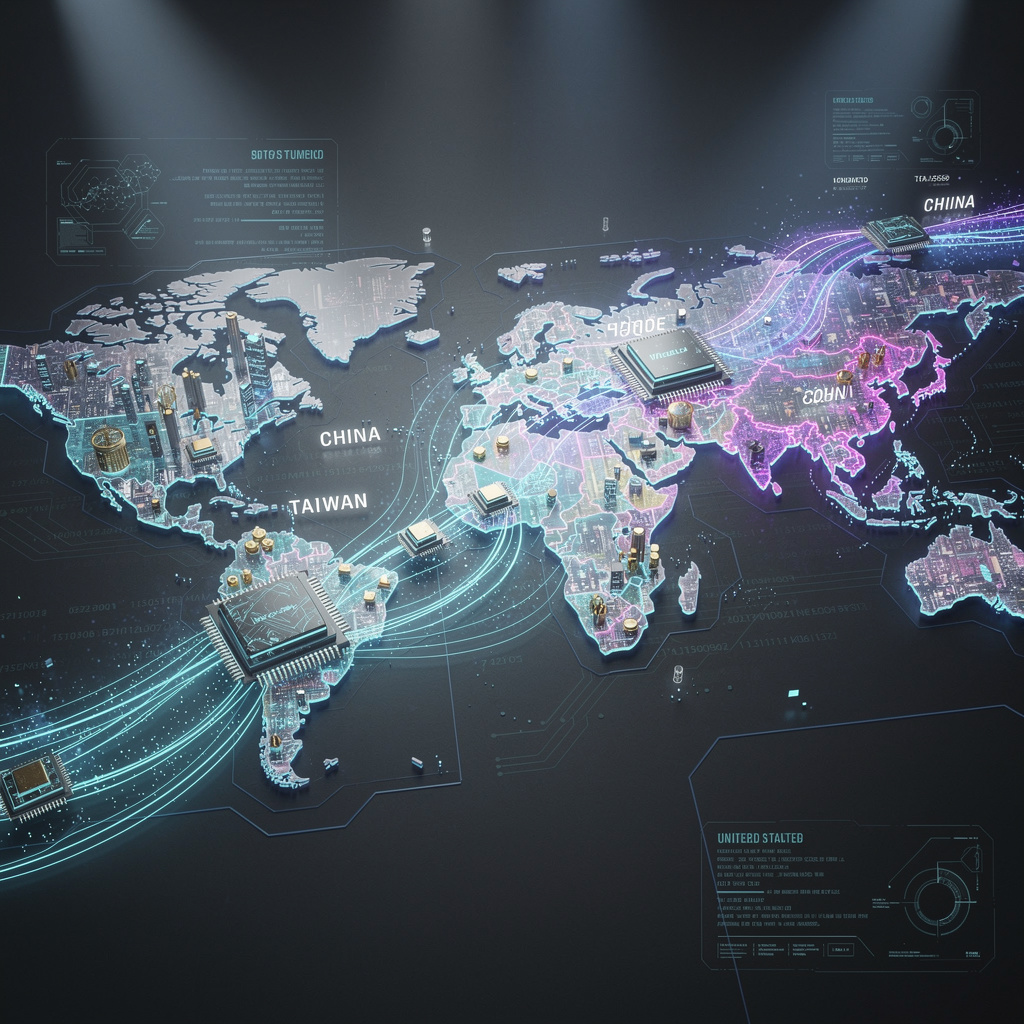
For nearly four years, the United States has waged an aggressive campaign to restrict China's access to advanced semiconductors—a cornerstone of America's broader strategy to maintain technological superiority in artificial intelligence. But that era appears to be ending. Nvidia is now preparing to ship up to 82,000 H200 AI GPUs to China before the Lunar New Year holiday, marking a dramatic shift in US export policy and signaling that the chip war's front lines are being redrawn in real time.
This development isn't merely a commercial transaction. It represents a fundamental recalibration of US-China technology competition, one that carries profound implications for global supply chains, geopolitical alliances, and the future trajectory of artificial intelligence development worldwide.
The Policy Pivot: From Embargo to Taxation
Under the Trump administration, the US has fundamentally altered its approach to restricting advanced chip exports. Rather than imposing an outright ban on Nvidia's H200 chips—a more advanced iteration of the widely-used H100 with enhanced memory capacity optimized for AI workloads—the government has opted for a novel mechanism: a 25% import tax collected at the point where chips manufactured in Taiwan enter US-bound supply chains.
This represents a significant departure from the sweeping export controls implemented since 2022, which targeted any advanced semiconductors exceeding specific performance thresholds. The H200, with its superior capabilities for large language models and complex AI applications, was previously considered too sensitive for Chinese markets. Now, with White House approval explicitly confirmed by administration officials, the chips can flow to approved customers in China and other regions.
The taxation approach is particularly strategic from a policy perspective. Rather than attempting to enforce an unenforceable ban—which China would likely circumvent through intermediaries and gray markets—the US instead monetizes the trade. The 25% fee generates government revenue while allowing commerce to proceed, representing a pragmatic acknowledgment that technological restrictions, however well-intentioned, face inevitable erosion in an interconnected global economy.
What Changed: The Trump Administration's Calculation
President Trump's public statements authorizing H200 shipments signal a strategic reconsideration of how the US should compete with China technologically. The previous administration's approach—restrictive export controls designed to starve Chinese AI development—operated on the assumption that limiting chip access would slow China's progress indefinitely.
The emerging Trump-era framework operates on different assumptions: that restriction is futile against determined competitors with alternative supply chains, that maintaining technological leadership requires continuous innovation rather than hoarding existing technology, and that commercial relationships can serve strategic interests more effectively than isolation.
This shift also reflects broader concerns about US competitiveness. Nvidia, which dominates the global AI chip market with roughly 80-90% market share, has significant financial incentives to access the Chinese market. Allowing these shipments helps the company maintain revenue growth and profitability—factors that ultimately fund the research and development that keeps US semiconductor companies ahead of competitors. Conversely, overly restrictive policies risk pushing Chinese customers toward alternatives, including domestic Chinese firms like Huawei, which could accelerate China's indigenous chip development capabilities.
The Logistics and Timeline: Racing Against the Clock
The timing of this shipment—targeting delivery before the Lunar New Year holiday in late January or early February 2026—reveals careful strategic planning. The Lunar New Year represents a natural pause in business activity across Asia, making it a logical deadline for completing major transactions before the holiday break.
Moving 82,000 advanced GPUs across international borders is a monumental logistical undertaking. Each H200 chip represents cutting-edge manufacturing, with TSMC's involvement in production adding another layer of complexity. The sheer scale of this shipment—the largest of this advanced silicon to China in recent memory—suggests that Nvidia and US officials have been coordinating extensively to prepare infrastructure, documentation, and compliance mechanisms.
For Nvidia, this shipment could significantly boost Q1 2026 earnings despite the 25% tax burden. China represents a substantial market for AI infrastructure, with domestic companies racing to build competitive large language models and AI services. The H200's superior memory capacity makes it particularly valuable for these applications, suggesting strong demand among Chinese technology firms.
Blurred Lines and Unintended Consequences
While this policy adjustment may seem pragmatic, it carries significant risks and implications that extend far beyond Nvidia's quarterly results.
First, the decision potentially strains relationships with key US allies, particularly Taiwan. TSMC, the Taiwanese semiconductor manufacturer responsible for producing these chips, finds itself in an increasingly precarious position—caught between US strategic interests and Chinese market demand. The 25% import tax mechanism explicitly acknowledges TSMC's role in the supply chain, potentially creating friction with a critical partner in US semiconductor strategy.
Second, this shift may accelerate China's development of indigenous chip capabilities. By allowing advanced chips to flow into China, the US provides Chinese engineers with access to cutting-edge technology for reverse engineering and competitive analysis. While Nvidia's technological lead remains substantial, each generation of chips that reaches Chinese markets provides valuable intelligence for domestic competitors.
Third, the policy creates a precedent that could expand beyond H200 chips. If this taxation-based approach succeeds, it may become the template for future advanced semiconductor exports, potentially unlocking access to even more sensitive technologies under similar fee structures.
The Broader Context: AI Competition in 2026
This development occurs against a backdrop of intensifying global competition for AI dominance. The US maintains clear advantages in chip design, manufacturing partnerships, and software ecosystems. However, China's AI capabilities have advanced rapidly, and Chinese companies have demonstrated remarkable ability to optimize existing technology and deploy it at massive scale.
The H200 shipments represent acknowledgment that technological isolation isn't a sustainable competitive strategy. Instead, the US is pivoting toward a model where it maintains leadership through continuous innovation, strategic partnerships, and selective market access mechanisms that generate revenue while preserving some degree of control.
This approach also reflects confidence in American technological capabilities. If US companies can consistently produce the next generation of chips faster than competitors can reverse-engineer the current generation, then allowing some degree of market access becomes less risky. It's a bet on perpetual innovation as a competitive moat.
Conclusion: A New Era in Tech Competition
The Nvidia H200 shipments to China mark a watershed moment in US-China technology competition. They signal that the era of absolute export bans is giving way to a more nuanced, market-based approach that acknowledges both the futility of total restriction and the value of maintaining technological leadership through innovation rather than isolation.
For businesses, policymakers, and technologists watching these developments, the message is clear: the rules governing technology trade are being rewritten in real time. Companies should prepare for a more dynamic, less predictable regulatory environment where strategic calculations shift with administration changes and geopolitical considerations.
The question isn't whether China will eventually access advanced chips—that outcome is virtually inevitable in a globalized economy. The question is whether the US can maintain its innovation lead while adapting to this new reality. The H200 shipments suggest that at least some American policymakers believe the answer is yes, and that pragmatic engagement may serve strategic interests better than futile restriction.
As we head into 2026, watch how this policy adjustment evolves. If successful, it could reshape not just semiconductor trade but the entire framework of how democracies compete with authoritarian systems in the AI age.