Nvidia's China Gambit: Why 2 Million H200 Orders Signal Seismic Shifts in Global AI Competition
In the high-stakes world of artificial intelligence hardware, a single order can reshape market dynamics. In late December 2025, Reuters reported that Nvidia is urgently approaching Taiwan Semiconductor Manufacturing Company (TSMC) to secure additional production capacity for its H200 chips—a move driven by explosive demand from Chinese technology companies that has left current inventory severely depleted.
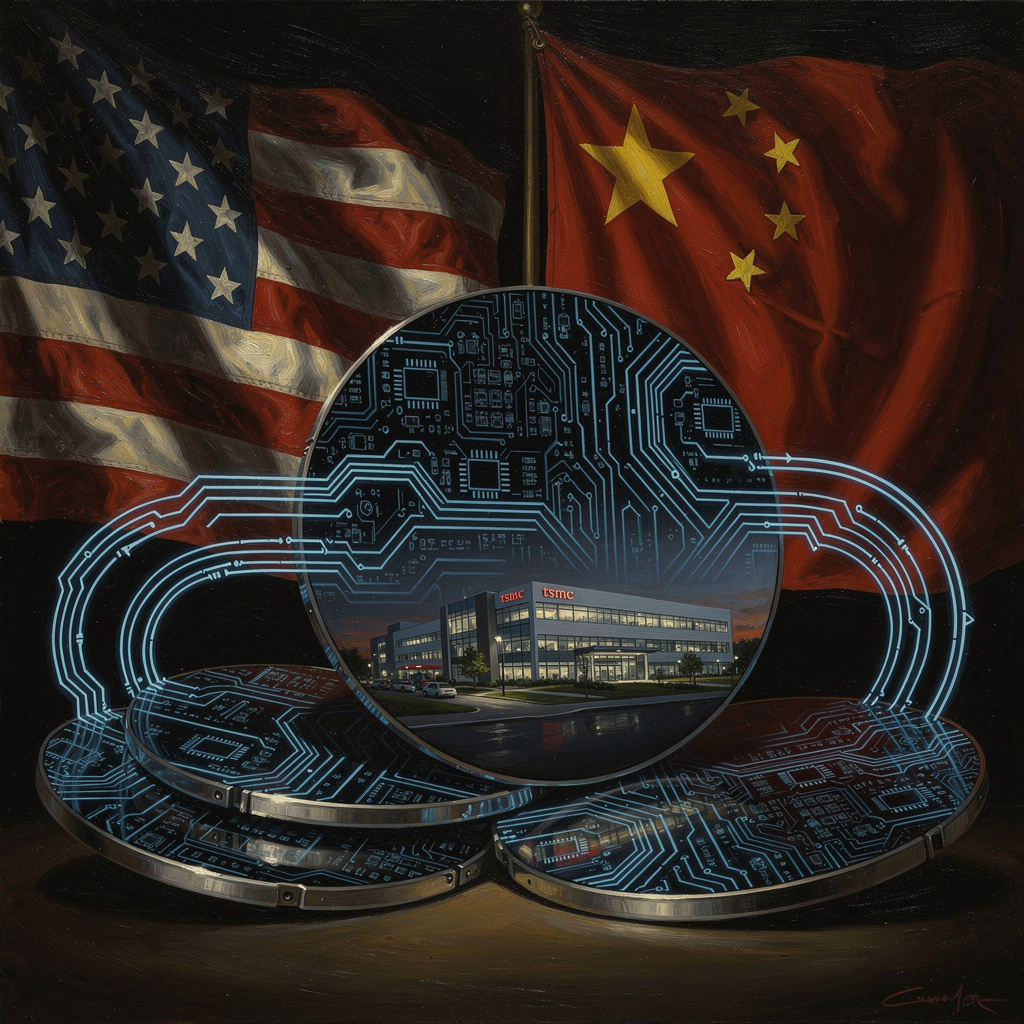
This isn't merely a supply chain story. It represents a critical inflection point in the ongoing US-China technology competition, revealing how Chinese tech giants are strategically navigating export restrictions while Nvidia faces an enviable problem: demand so robust it threatens to outpace even the world's most advanced chip manufacturer's production capabilities.
The Perfect Storm: Demand Exceeds Supply
According to multiple industry sources, Chinese technology companies have placed orders for approximately 2 million H200 chips, with delivery timelines extending into 2026. This volume represents demand that "far exceeds inventory with Nvidia," forcing the semiconductor giant into an unusual position: actively courting its primary manufacturing partner to accelerate production schedules.
The H200 represents a significant leap from its predecessor, the H100. Equipped with 141GB of HBM3e memory—nearly double the H100's capacity—the H200 is purpose-built for the most demanding artificial intelligence workloads: training large language models, running complex inference operations, and powering the data center infrastructure that underpins modern AI systems.
What makes this surge in Chinese demand particularly notable is that it's occurring despite—or perhaps because of—increasingly stringent US export controls. While Nvidia's most advanced chips, including the H100 and H800, have been restricted from export to China since 2023, the H200 remains compliant with current regulations. This regulatory window has created a critical opportunity that Chinese technology giants like ByteDance, Alibaba, and Tencent are rushing to exploit before potential restrictions tighten further.
The Export Control Paradox
The US government has implemented progressively tighter restrictions on AI chip exports to China, viewing advanced semiconductor technology as critical national security infrastructure. Yet this regulatory approach has created an unintended consequence: it has made compliant alternatives like the H200 exceptionally valuable to Chinese firms facing an uncertain regulatory future.
Industry observers recognize that additional export restrictions could arrive as soon as 2026. This possibility is likely driving the urgency behind Chinese companies' current purchasing decisions. The logic is straightforward: secure as much advanced AI hardware as possible now, before the regulatory window closes. This creates a self-reinforcing dynamic where anticipated restrictions accelerate current demand, which in turn strains global supply chains.
For Nvidia, this presents a delicate balancing act. China has historically represented 20-25% of the company's revenue—a meaningful but not dominant portion of its business. However, the company must carefully navigate compliance requirements while capitalizing on this demand surge. The H200's regulatory status as an export-compliant product provides Nvidia with a legitimate path to serve this market, but executives must constantly assess the risk-reward calculus of deepening Chinese customer relationships.
TSMC's Critical Role and Capacity Constraints
Nvidia's approach to TSMC is where this story becomes truly significant. TSMC isn't simply another manufacturing partner—it's the indispensable foundation of Nvidia's production ecosystem. The Taiwanese foundry currently produces Nvidia's most advanced chips using cutting-edge process nodes like 4NP, and Nvidia accounts for approximately 50% of TSMC's CoWoS (Chip-on-Wafer-on-Substrate) advanced packaging capacity.
When Nvidia approaches TSMC about ramping H200 production, it's essentially asking the world's most capable chip manufacturer to prioritize its orders in an already constrained environment. TSMC is expected to accelerate H200 production in response, but this comes with implications for the entire semiconductor ecosystem. Every wafer dedicated to H200 production is a wafer not available for other customers—a zero-sum game in an industry already grappling with supply bottlenecks.
This dynamic will likely persist throughout 2026, creating ripple effects across the AI hardware landscape. Data center operators worldwide will continue facing GPU shortages. Startups and smaller enterprises without Nvidia's purchasing power will struggle to secure advanced AI accelerators. Meanwhile, well-capitalized Chinese technology companies with direct relationships to Nvidia will gain a competitive advantage in building out their AI infrastructure.
Implications for the Global AI Supply Chain
The convergence of these factors—surging Chinese demand, regulatory uncertainty, and manufacturing constraints—signals that global AI supply chains will remain under significant stress throughout 2026 and potentially beyond.
For investors, this story validates Nvidia's dominant market position. The company controls over 80% of the AI accelerator market, and competitors like AMD are still working to achieve meaningful scale. This near-monopoly position allows Nvidia to command premium pricing and secure manufacturing priority, even as demand outpaces supply.
For TSMC, the situation is similarly favorable. Nvidia's expansion of orders will support continued revenue growth and capacity utilization. However, the foundry must carefully manage customer relationships across its portfolio, balancing Nvidia's enormous demands against commitments to other major clients.
For Chinese technology companies, the current window represents a critical opportunity. Securing 2 million H200 chips provides substantial AI compute capacity that will power next-generation language models, recommendation systems, and other AI applications throughout 2026 and beyond. However, these companies must also prepare contingency plans for a scenario where export restrictions tighten and H200 availability diminishes.
From a geopolitical perspective, this story underscores an important reality: export controls, while slowing Chinese AI advancement, cannot halt it entirely. Chinese firms are systematically working within regulatory constraints, securing compliant hardware and building domestic alternatives. This suggests that long-term US technological advantage in AI may depend less on export restrictions and more on continued innovation and ecosystem depth.
Conclusion: The New Normal in AI Hardware Competition
Nvidia's urgent outreach to TSMC regarding H200 production capacity represents more than a routine supply chain adjustment. It reflects the intense competition for AI dominance, the strategic importance of semiconductor manufacturing, and the complex interplay between technological innovation and geopolitical constraints.
The 2 million H200 chips destined for Chinese companies will power significant AI capabilities, from training frontier models to deploying production systems. This represents real competitive progress for Chinese technology companies, even as US export controls attempt to maintain technological advantage.
As we move through 2026, the AI hardware market will likely remain characterized by supply constraints, premium pricing, and intense competition for manufacturing capacity. Companies with strong relationships to TSMC and Nvidia will thrive. Those without such connections will face continued challenges in accessing the compute resources necessary to compete in AI.
Ultimately, this story reveals that in the race for artificial intelligence dominance, control of manufacturing capacity and compliant technology pathways may prove as important as raw innovation. Nvidia and TSMC have positioned themselves at the center of this competition, and their ability to meet surging global demand—from China and beyond—will shape the AI landscape for years to come.