
Introduction: Venturing into the Void
As someone who's spent years tracking the evolution of robotics from dusty lab floors to the stars, I can tell you that space robotics isn't just the next big thing—it's the key to unlocking humanity's future in orbit and beyond. Imagine robots that don't just follow pre-programmed scripts but learn, adapt, and thrive in the unforgiving vacuum of space, where a single miscalculation could mean disaster. That's the promise of the latest advancements coming out of the University of Southern California's Department of Astronautical Engineering (ASTE). Their push into autonomous space robotics, as highlighted in recent announcements from the USC Viterbi School of Engineering, marks a thrilling shift. No longer confined to predictable Earth-bound tasks like assembly lines or self-driving cars, these systems are being engineered for the edge of the unknown—environments defined by microgravity, radiation, and vast communication blackouts. In this article, I'll dive into USC's role, the technical hurdles, ethical quandaries, and what it all means for our cosmic ambitions.
USC's Bold Leap into Autonomous Space Exploration
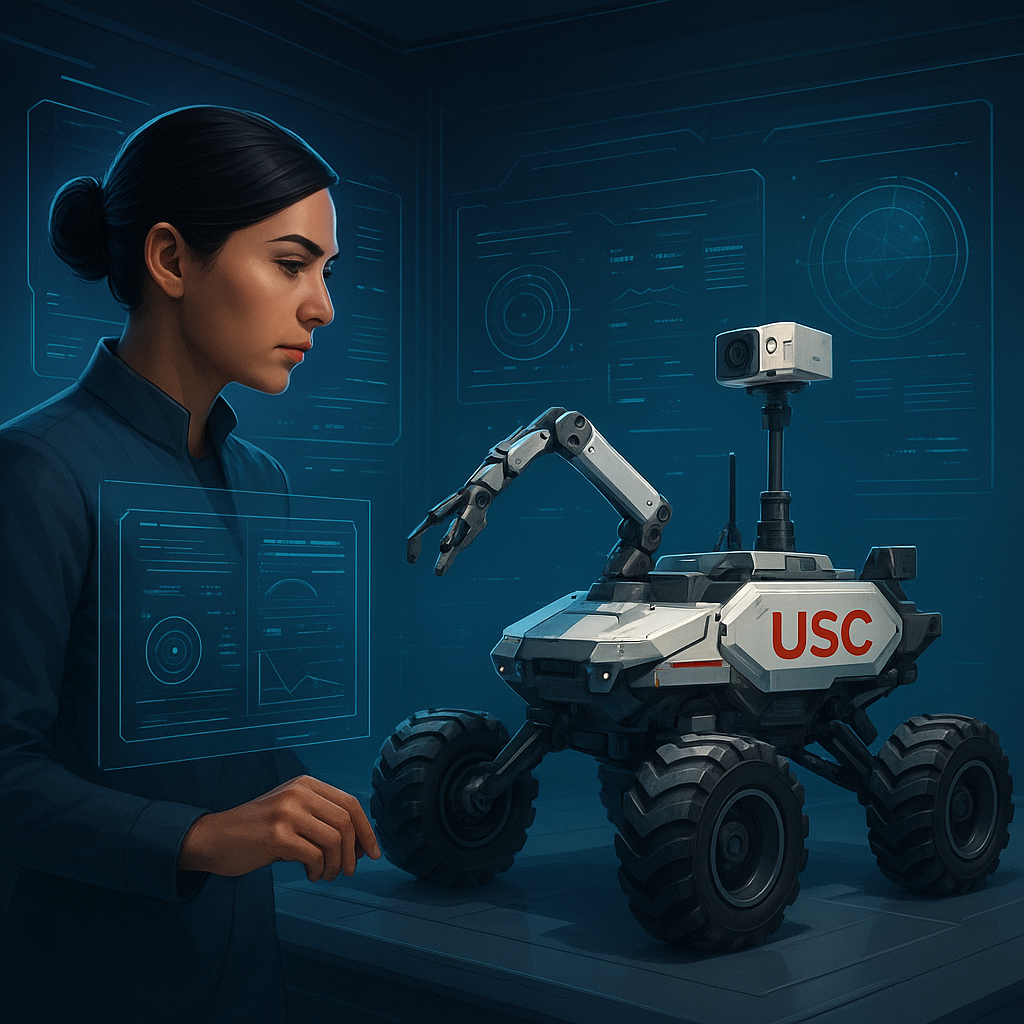
At the heart of this revolution is USC's ASTE department, which is expanding its curriculum and research to prioritize space robotics with a laser focus on autonomy. Traditionally, robotics has thrived in controlled settings—think factory robots welding car parts or drones navigating city streets with GPS crutches. But space? That's a different beast. As detailed in USC Viterbi's recent feature 'Space Robotics at the Edge of the Unknown,' the department is gearing up to train the next generation of engineers for missions where robots must operate independently in 'undefined environments.'
This isn't hype; it's a strategic pivot driven by necessity. With NASA's Artemis program and private ventures like SpaceX pushing deeper into space, the demand for on-orbit servicing (OOS) is skyrocketing. OOS encompasses everything from docking satellites to refueling them mid-flight or even repairing damaged hardware—tasks too risky or costly for humans alone. USC's emphasis on autonomy means developing robots that can generalize their learning, adapting to surprises like unexpected debris or shifting solar flares without constant Earth-side input. I've seen how this builds on foundational work: early space bots like the Canadarm on the Space Shuttle were marvels of precision, but they were tethered to human commands. Today's vision? Swarms of modular robots assembling habitats in orbit, drawing from industry collaborations like those between Rendezvous Robotics and Starcloud, which integrate orbital data and energy systems for seamless space-based construction.
What excites me most is the institutional momentum. USC isn't alone; major universities like Carnegie Mellon are also NSF-funded powerhouses in this space (pun intended). But USC's West Coast vantage point, close to aerospace hubs in California, positions it uniquely to bridge academia and industry. Their programs are fostering not just tech wizards but interdisciplinary thinkers who can tackle the full spectrum of space challenges.
Tackling the Technical Frontiers: From Testbeds to Orbit
Space robotics demands innovation that pushes far beyond terrestrial limits. Unlike Earth robots, which deal with gravity and reliable comms, space systems battle vacuum-induced material degradation, cosmic radiation scrambling electronics, and delays in signals that can stretch minutes across vast distances. Enter the need for 'robot learning algorithms' that generalize across unpredictable scenarios—a holy grail in AI research.
A standout example is the Space Robotics Bench, a cutting-edge testbed outlined in a recent arXiv paper titled 'Space Robotics Bench: Robot Learning Beyond Earth.' This setup simulates the chaos of space, allowing researchers to train algorithms in microgravity analogs and radiation-hardened environments. It's not just about survival; it's about thriving. These benches enable robots to learn from simulations and real-world analogs, then apply that knowledge to tasks like debris capture or satellite repair. I've followed similar efforts, and the implications are profound: what starts as a lab experiment could evolve into autonomous fleets clearing orbital junk, preventing Kessler Syndrome—a cascade of collisions that could render low-Earth orbit unusable.
Industry is accelerating this too. Partnerships highlighted in Space Daily reports, such as orbital data and energy collaborations, are commercializing modular systems that robots can snap together like cosmic Legos. NSF grants are pouring in, recognizing space robotics as vital for national security and sustainability. And let's not forget human-robot teamwork: emerging research explores interaction in space, where bots might assist astronauts on the Moon or Mars, handing tools or scouting hazards in real-time. As an expert, I see this convergence—academic rigor, government backing, and private innovation—as the recipe for breakthroughs that could make deep-space missions routine.
Navigating Ethical Horizons: Consciousness and Decision-Making in the Stars
Amid the tech triumphs, space robotics raises thorny questions about autonomy's darker side. As systems grow smarter, capable of independent choices, we're forced to confront: At what point does a robot 'decide' like a human? A Space Daily piece on the intensifying consciousness debate captures this urgency, with scientists calling for ethical frameworks to guide AI and robotics development.
In space, stakes are existential. An autonomous robot refueling a satellite might weigh risks—do you abort if comms fail, potentially dooming the mission, or proceed on learned judgment? Ethicists and engineers must collaborate to embed safeguards, ensuring decisions align with human values. I've participated in panels on this, and the consensus is clear: without clarity on AI 'consciousness'—or at least its illusion—we risk unintended consequences, from biased algorithms favoring certain missions to over-reliance on machines in life-or-death scenarios.
Broader implications touch space sustainability. Autonomous systems could enforce debris removal protocols or manage resource allocation in orbital economies, but only if programmed with equitable, transparent rules. This interdisciplinary dialogue, blending engineering with philosophy, is crucial as we commercialize space. USC's programs, by incorporating these discussions, are preparing students not just to build robots, but to steward them responsibly.
Conclusion: Charting a Robotic Future Among the Stars
Looking ahead, USC's foray into space robotics signals a paradigm shift: from reactive tools to proactive partners in exploration. As autonomous systems mature, they'll enable feats once confined to sci-fi—self-assembling space stations, robotic precursors to human colonies on Mars, and sustainable orbits free of clutter. Yet, success hinges on balancing innovation with ethics, ensuring these machines augment humanity without supplanting our judgment. For me, as a longtime observer, this era feels like the dawn of a new space age, where robots don't just reach the stars—they help us stay there. The implications? A more accessible, resilient cosmos, but only if we navigate the unknowns with wisdom.
Brief Summary
USC's expansion into autonomous space robotics heralds a transformative era for exploration, emphasizing systems that adapt to unpredictable environments for on-orbit servicing and beyond. By addressing technical challenges through innovative testbeds and ethical frameworks, this field promises sustainable space operations while raising vital questions about AI decision-making. Ultimately, these advancements could redefine humanity's cosmic footprint, blending cutting-edge tech with responsible stewardship.