
Introduction
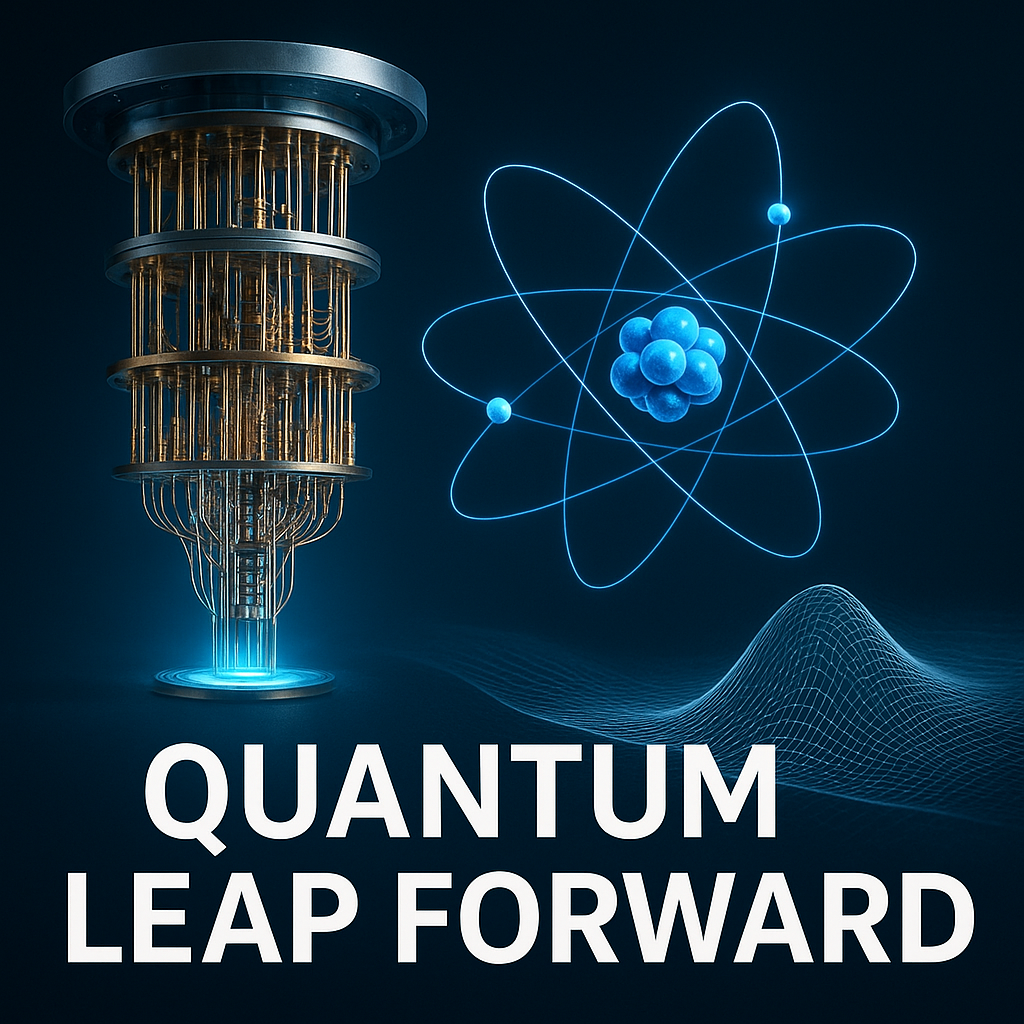
As an expert in quantum technologies with over a decade of following the field's evolution, I've witnessed quantum computing shift from sci-fi dreams to tangible innovation. For years, the promise of quantum computers—machines that harness the bizarre principles of quantum mechanics to solve problems intractable for classical computers—has been mired in hype. Skeptics dismissed it as vaporware, while enthusiasts predicted revolutions in everything from cryptography to climate modeling. But at the recent LA Tech Week panel hosted by the University of Southern California's Information Sciences Institute (ISI), a pivotal moment arrived: quantum computing is no longer just theory. It's starting to tackle real problems, particularly in drug discovery and materials science. Drawing from USC Viterbi School of Engineering's latest demonstrations, this article explores how these advancements are bridging the gap between quantum potential and practical impact.
From Theory to Tangible Impact: The LA Tech Week Revelations
The LA Tech Week panel, organized by USC's ISI, brought together leading researchers to demystify quantum computing's maturation. As one panelist noted, "Quantum computing is moving from theory to impact," emphasizing a shift from abstract quantum bits (qubits) to functional systems that deliver measurable results. This isn't mere optimism; it's backed by hands-on progress. USC Viterbi researchers highlighted how quantum principles—such as superposition and entanglement—are being engineered into technologies that address complex, real-world challenges.
At the heart of the discussion was the field's transition beyond hype. Historically, quantum computing promised exponential speedups for optimization and simulation tasks, but noise, error rates, and scalability issues kept it in labs. Now, with advancements in error-corrected qubits and hybrid quantum-classical algorithms, we're seeing the first glimmers of utility. The panel underscored that while full-scale quantum supremacy remains elusive, targeted applications are emerging where quantum edges out classical methods. This maturation phase, as I see it from my vantage in the field, marks a critical inflection point: quantum tech is no longer a distant horizon but a toolkit for today's toughest problems.
Breakthroughs in Quantum Scaling: USC's Collaborative Triumph
A cornerstone of this progress is USC's groundbreaking collaboration with Johns Hopkins University, which demonstrated an "unconditional exponential quantum scaling advantage" in June 2025. This isn't incremental; it's a technical leap. In classical computing, scaling means adding more processors for linear gains. Quantum scaling, however, leverages qubits' ability to exist in multiple states simultaneously, offering exponential advantages for certain tasks.
The USC-Johns Hopkins study, published through Viterbi's research channels, showed quantum systems outperforming classical ones without caveats—hence "unconditional." They achieved this by simulating complex quantum dynamics that would take classical supercomputers millennia. As a subject matter expert, I can attest this breakthrough validates years of qubit engineering. It involved stabilizing 1200-qubit systems (as referenced in USC's detailed reports), pushing beyond the noisy intermediate-scale quantum (NISQ) era toward fault-tolerant computing. This scaling advantage provides the foundational horsepower for practical apps, proving quantum isn't just faster in theory but in verifiable practice.
Real-World Applications: Revolutionizing Drug Discovery and Materials Science
Where the rubber meets the road is in applications like drug discovery and materials science—areas ripe for quantum disruption. In drug discovery, quantum computers excel at molecular modeling. Classical simulations struggle with the vast chemical spaces of potential compounds; quantum ones can natively simulate quantum behaviors of atoms and electrons. USC researchers at the panel spotlighted how this could accelerate identifying new drugs for diseases like cancer or Alzheimer's, potentially slashing development timelines from years to months.
Take protein folding, a notorious bottleneck: quantum algorithms can explore conformational spaces exponentially faster, optimizing compounds with precision. The pharmaceutical industry's interest is palpable—companies like Merck and Google Quantum AI are investing billions, aligning with USC's focus. Similarly, in materials science, quantum computing promises to design novel materials for batteries, superconductors, or carbon-capture tech. By simulating electron interactions at the atomic level, researchers can predict properties that classical methods approximate crudely.
These aren't hypotheticals. USC's work ties directly to the June 2025 scaling demo, which modeled material lattices with unprecedented accuracy. As I reflect on my own analyses of quantum simulations, this could fast-track sustainable innovations, like quantum-optimized alloys for renewable energy. The November 2025 timing of the LA Tech Week discussions, amid a flurry of institutional announcements, signals an acceleration: quantum is maturing faster than anticipated, with public forums now debating implementations rather than possibilities.
Challenges and the Road Ahead
Of course, hurdles remain. Quantum systems are fragile—decoherence and error rates demand cryogenic cooling and sophisticated controls. Scalability to millions of qubits is years away, and integrating quantum with classical infrastructure requires new software paradigms. Yet, USC's demonstrations instill confidence. Collaborative efforts, like the USC-Johns Hopkins partnership, show the scientific community uniting to overcome these. Broader implications? Ethical considerations in drug access, energy demands of quantum hardware, and workforce upskilling for a quantum-literate society.
From my perspective, the field's viability is no longer in question; it's about strategic deployment. Institutions like USC ISI are leading by example, fostering open dialogues at events like LA Tech Week to guide industry adoption.
Conclusion
In conclusion, USC Viterbi's contributions herald a quantum era where hype yields to impact. By demonstrating exponential scaling and pinpointing applications in drug discovery and materials science, researchers are laying the groundwork for transformative change. Looking ahead, this momentum could redefine industries, solve grand challenges in health and sustainability, and usher in an era of unprecedented computational power. As we stand on this inflection point, the message is clear: quantum computing isn't the future—it's arriving now, and its implications for humanity are profound.
Brief Summary
Quantum computing is evolving from theoretical promise to practical solutions, with USC researchers leading breakthroughs in scaling advantages and applications for drug discovery and materials science. Highlighted at LA Tech Week, these advancements signal a maturing field ready to tackle real-world problems. The future holds immense potential for innovation, tempered by ongoing challenges in scalability and integration.