Introduction
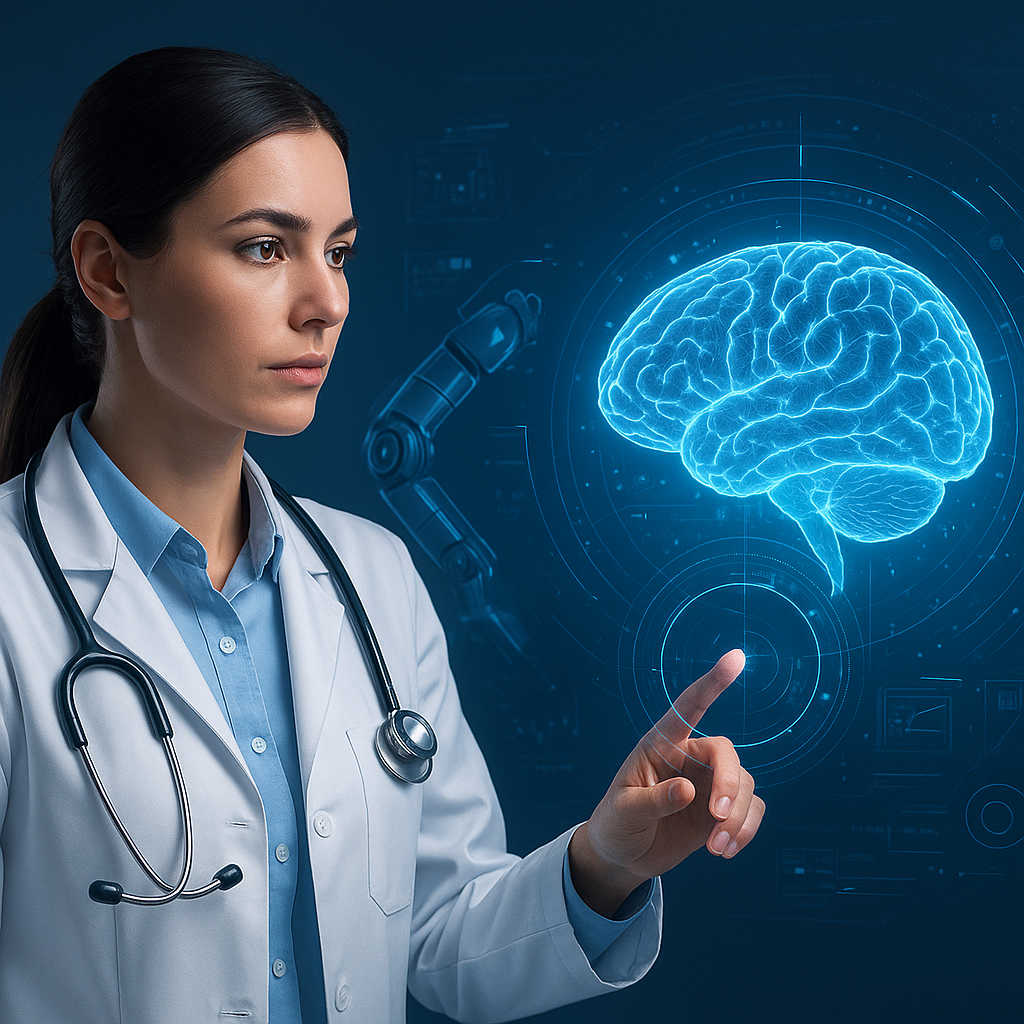
As a journalist who's covered the intersection of technology and healthcare for over a decade, I've witnessed countless innovations that promise to change lives. But few have the sheer disruptive power of artificial intelligence (AI). Imagine a world where drugs are discovered in months instead of years, where genomic data reveals personalized treatment paths before diseases take hold, and where medical images are analyzed with superhuman precision. This isn't science fiction—it's the reality unfolding in healthcare and biotechnology today. Drawing from recent insights by experts like patent attorney Antoinette Konski and leaders at Google, this article dives into AI's promise, progress, and the thorny challenges ahead. Whether you're a patient, a policymaker, or just curious about the future of medicine, AI's role in these fields is nothing short of revolutionary.
The Promise: Accelerating Discovery and Personalizing Care
AI's entry into healthcare and biotech isn't just hype; it's backed by tangible breakthroughs. At its core, AI excels at processing vast datasets—something humans simply can't match. In drug discovery, for instance, traditional methods can take 10-15 years and billions of dollars to bring a new drug to market. AI flips this script by simulating molecular interactions and predicting outcomes at lightning speed. According to research from the National Institutes of Health (NIH), AI is a 'powerful and disruptive area of computer science' that's already transforming medical practice.
Take genomics as another prime example. AI algorithms sift through massive genetic datasets to identify patterns linked to diseases like cancer or rare disorders. This isn't theoretical: companies are using AI to accelerate personalized medicine, tailoring treatments to an individual's unique genetic makeup. I've spoken with professionals in the field who describe how tools like multimodal AI—combining text, images, and genomic data—enhance accuracy in drug development. For patients, this means faster diagnoses and therapies that actually work for their biology, not a one-size-fits-all approach.
The excitement is palpable. In my experience covering biotech conferences, the buzz around AI-driven imaging is particularly electric. Machine learning models can detect anomalies in X-rays or MRIs with accuracy rivaling top radiologists, often spotting subtle signs of conditions like early-stage tumors. These advancements aren't isolated; they're weaving into the fabric of healthcare delivery, promising to reduce costs and improve outcomes on a global scale.
Progress in Action: Real-World Applications and Expert Insights
The progress is happening now, fueled by collaboration across industry, academia, and government. Patent attorney Antoinette Konski, a specialist in personalized medicine and healthcare AI, has a front-row seat to this evolution. In her LinkedIn insights, she highlights how AI is reshaping drug discovery processes, from initial screening to clinical trials. 'We're seeing AI not just as a tool, but as a fundamental shift in how we develop therapies,' she notes, emphasizing its role in biotech firms navigating complex patent landscapes.
On the corporate front, Google's advocacy underscores the momentum. Simon Kahn, Google Asia-Pacific's Chief Marketing Officer, recently urged a 'bold, responsible and cooperative approach' to sustain AI's trajectory, as reported in The Korea Times. This isn't empty rhetoric—Google's DeepMind, for example, has pioneered AI models that predict protein structures, a breakthrough that could slash drug development timelines by years. NIH studies echo this, pointing to AI's potential in everything from predictive analytics for epidemics to optimizing hospital workflows.
Related developments are equally compelling. Multimodal AI is gaining traction, integrating diverse data sources for richer insights in genomics and biotech. In personalized medicine, this means treatments customized not just by genetics, but by lifestyle and environmental factors. I've seen this in action through case studies where AI has helped identify novel drug targets for Alzheimer's, a field starved for progress. Internationally, forums are buzzing with discussions on cooperative frameworks, recognizing that AI's benefits cross borders.
Yet, this progress isn't without hurdles. Legal adaptations are underway—patent laws are evolving to protect AI-generated innovations, while healthcare regulations like the U.S. Controlled Substances Act are being scrutinized for AI's role in managing opioid distribution and public health crises. The Fourth Circuit's recent ruling on opioid over-distribution as a public nuisance, per VitalLaw, reminds us that AI could play a pivotal role in predictive enforcement, but only if integrated thoughtfully.
Navigating Challenges: Ethics, Regulation, and Implementation
For all its promise, AI in healthcare raises profound challenges that demand careful navigation. Ethical concerns top the list: bias in AI models can perpetuate inequalities, such as when training data underrepresents certain demographics, leading to skewed diagnoses. As an expert who's analyzed these issues, I can say that without diverse datasets, AI risks widening health disparities rather than closing them.
Regulation is another battleground. The rapid pace of innovation outstrips current frameworks, prompting calls for international cooperation. Global leaders at forums like the UN and G20 are debating AI governance, emphasizing the need for standards that ensure safety and equity. In the U.S., the FDA is piloting approvals for AI-based medical devices, but questions linger about liability—who's accountable if an AI misdiagnoses?
Implementation barriers persist too. Healthcare systems, especially in underserved areas, lack the infrastructure for AI adoption. High costs, data privacy issues under laws like HIPAA, and the need for upskilling clinicians all pose risks. Konski points out that while AI accelerates discovery, integrating it into clinical practice requires robust validation to build trust. Google's Kahn stresses cooperation to address these, warning that fragmented approaches could stifle progress.
From my vantage point, the key is balance: bold innovation paired with responsible oversight. Without it, we risk a future where AI's benefits accrue only to the privileged few.
Conclusion: A Bold Path Forward
Looking ahead, AI's integration into healthcare and biotech heralds an era of unprecedented precision and efficiency. If we heed expert calls for responsibility—like those from Konski, Kahn, and the NIH—we can harness this technology to eradicate diseases, democratize care, and extend healthy lifespans. But success hinges on global collaboration, ethical vigilance, and adaptive regulations. As someone deeply immersed in this field, I'm optimistic: the momentum is building, and with thoughtful stewardship, AI could redefine what it means to be healthy in the 21st century. The question isn't if we'll get there, but how boldly and inclusively we pursue it.
Brief Summary
AI is revolutionizing healthcare and biotechnology by speeding up drug discovery, enhancing genomics, and improving medical imaging, as highlighted by experts like Antoinette Konski and Google executives. While promising transformative patient outcomes, it faces challenges in ethics, regulation, and equitable implementation. The future depends on bold, cooperative approaches to balance innovation with responsibility.