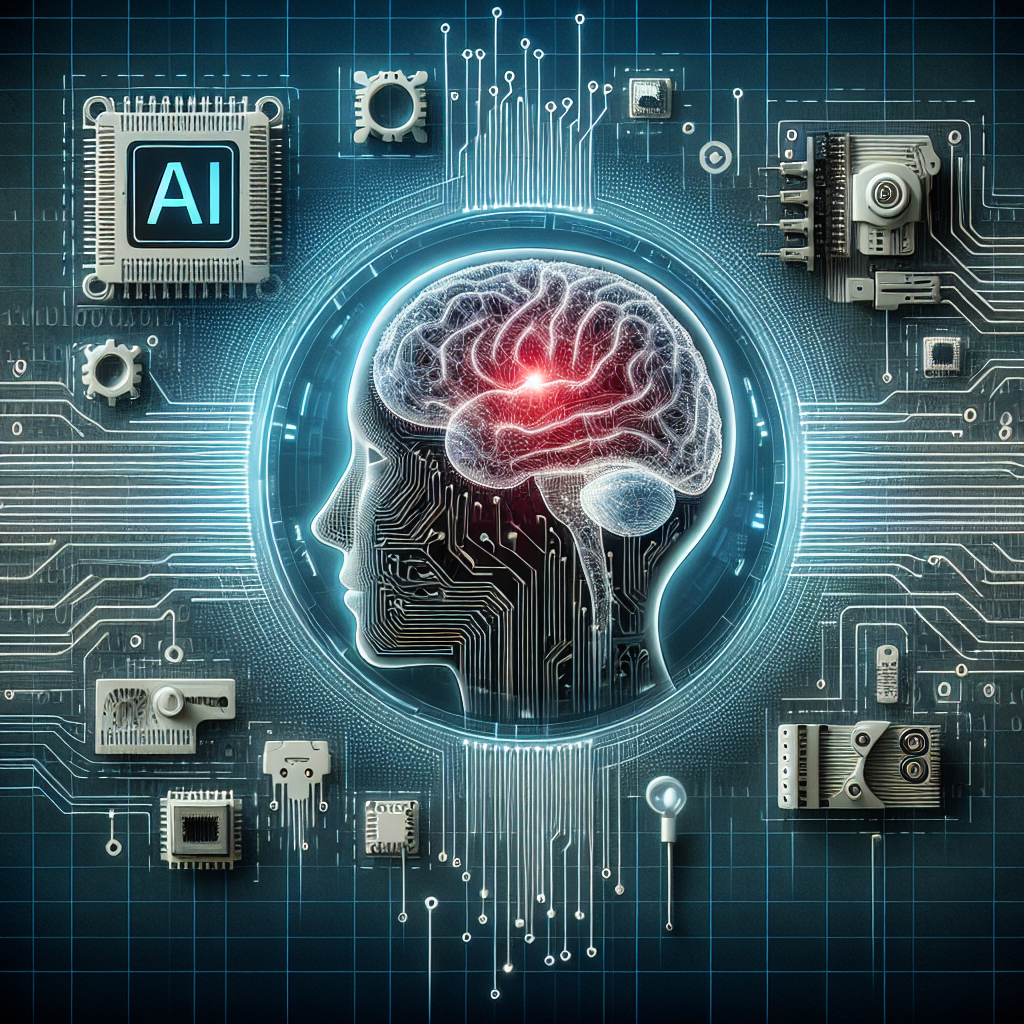
IntroductionBrain-computer interfaces (BCIs) have long held promise for restoring motor function and communication in individuals with paralysis. Recent breakthroughs in artificial intelligence (AI) have significantly advanced the field, enabling noninvasive BCIs to achieve unprecedented levels of precision and speed. This article delves into the exciting developments in AI-enhanced brain-computer interfaces (AI-BCIs), exploring their potential to revolutionize the lives of people with motor impairments.## Background and ContextHistorically, invasive BCIs have provided higher fidelity signals but come with surgical risks. Noninvasive BCIs, on the other hand, offer safer alternatives but have been limited by lower signal quality and slower response times. The integration of AI copilots has transformed noninvasive BCI performance, acting as intelligent intermediaries that predict user intent and correct errors. This synergy between AI and BCIs has opened new avenues for practical, everyday assistive technologies that can improve quality of life for people with motor impairments.## Key Developments and FindingsResearch has shown that AI-BCIs can significantly improve the ability of users with paralysis to control external devices, achieving up to 3.9 to 4.3 times higher performance in task completion speed and accuracy compared to traditional BCIs. The use of AI copilots enables noninvasive BCIs to better interpret user intent, facilitating complex tasks such as cursor control and robotic arm manipulation with higher precision and reduced cognitive load. Recent developments focus on wearable, noninvasive AI-BCI systems, which combine advanced machine learning algorithms with neural signal decoding to allow real-time, intuitive control of assistive devices without surgical implants.## Expert Insights and Future DirectionsAccording to a lead UCLA engineer involved in the project, 'The AI copilot fundamentally changes how we interpret brain signals, enabling users to perform tasks much faster and with greater accuracy than previously possible.' The corresponding author of the Nature publication noted that 'Our findings demonstrate that AI-assisted BCIs can bridge the gap between neural intent and device control, opening new avenues for noninvasive neuroprosthetics.' As research continues to advance, we can expect to see broader clinical applications, including communication aids and environmental control systems for people with severe paralysis. Ongoing studies are exploring the scalability of AI-BCIs to multi-degree-of-freedom control and integration with wearable technologies, potentially enabling seamless, real-world use outside laboratory settings.## ConclusionThe emergence of AI-enhanced brain-computer interfaces represents a significant leap towards practical, everyday assistive technologies that can improve quality of life for people with motor impairments. As the field continues to evolve, we can anticipate the development of more sophisticated, wearable, and noninvasive AI-BCI systems. These advancements will not only enhance the lives of individuals with paralysis but also pave the way for a new era of human-machine interaction, where technology seamlessly integrates with the human brain to restore and augment motor function. With ongoing research and innovation, the possibilities for AI-BCIs seem endless, and their potential to revolutionize the lives of people with motor impairments has never been more promising.