
Introduction: A New Frontier in Cell Fate Control
As someone who's spent years delving into the intricacies of stem cell biology, I've always been fascinated by how a single cell can transform into the diverse array of tissues that make up our bodies. Controlling this process—known as differentiation—has been the holy grail of regenerative medicine. Imagine engineering stem cells to repair damaged hearts or regenerate neural tissue with pinpoint accuracy. Yet, despite decades of research, the mechanisms governing these transitions have remained elusive. That is, until now.
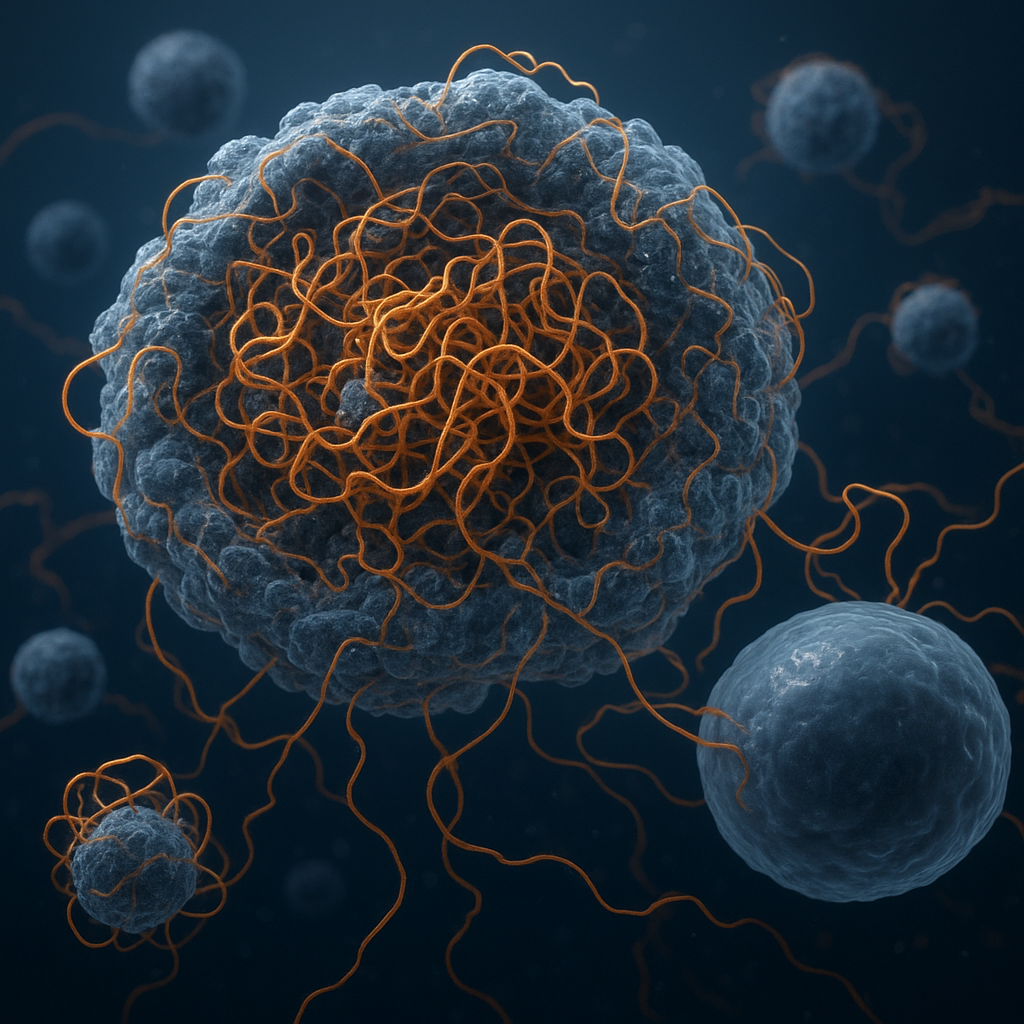
A groundbreaking study published in Nature has unveiled a remarkable discovery: biomolecular condensates, those enigmatic, droplet-like structures within cells, play a starring role in directing stem cell fate. Specifically, processing bodies (P-bodies)—membrane-less organelles that manage RNA—selectively sequester untranslated RNAs encoding key cell fate regulators. This isn't just a storage trick; it's a dynamic, conserved mechanism that could revolutionize how we think about development and disease. In this article, I'll break down the science, its implications, and why this finding excites me as an expert in the field.
The Science Behind RNA Sequestration in P-Bodies
Let's start with the basics. Biomolecular condensates form through a process called liquid-liquid phase separation, where proteins and nucleic acids spontaneously organize into concentrated, gel-like droplets inside the cell. These aren't rigid structures; they're fluid, allowing molecules to move and interact in ways that traditional organelles can't. P-bodies, in particular, are hubs for RNA metabolism—storing, degrading, or repressing the translation of messenger RNAs (mRNAs) that carry genetic instructions.
The Nature study, led by researchers exploring vertebrate stem cells, reveals that P-bodies don't just passively hold RNAs. They actively select and sequester specific untranslated mRNAs that code for proteins crucial to cell identity. For instance, in embryonic stem cells transitioning to neural or muscle lineages, certain fate-determining transcripts are trapped in these condensates, preventing their translation until the right moment. This selective sequestration acts like a molecular switch, fine-tuning when and where these proteins are produced.
What struck me most is the precision of this process. Using advanced imaging and sequencing techniques, the team showed that the RNAs targeted are not random; they're enriched for regulators of developmental pathways, such as those involved in pluripotency maintenance or lineage commitment. In experiments with mouse and human stem cells, disrupting P-body formation led to aberrant differentiation, underscoring the direct causal link. This isn't mere correlation—it's a mechanistic driver of cell fate.
Conservation and Cell-Type Specificity: A Universal Developmental Code
One of the most compelling aspects of this research is its evolutionary angle. The mechanism is conserved across vertebrate species, from zebrafish to humans, suggesting it's a fundamental principle etched into our developmental blueprint. Yet, it's not a one-size-fits-all system. The study highlights cell-type specificity: different cell lineages sequester distinct RNA sets to steer their unique paths.
For example, in neural progenitors, P-bodies might hoard mRNAs for transcription factors that promote neuronal identity, releasing them as the cell commits to a brain cell fate. In contrast, muscle stem cells could prioritize transcripts for contractile proteins. This specificity arises from the composition of the condensates themselves—proteins like DDX6 and EDC4, which are core P-body components, interact with RNA-binding proteins that recognize sequence motifs in target mRNAs.
From my perspective, this duality—universal yet tailored—mirrors how evolution balances efficiency with adaptability. It's reminiscent of transcriptional networks we've studied for years, but this posttranscriptional layer adds a layer of control that's faster and more reversible, ideal for the dynamic decisions in early development. The findings, detailed in the paper (available at nature.com/articles/s41587-025-02853-z), were validated across models, including bioRxiv preprints and PubMed entries, confirming robustness.
Implications for Medicine and Beyond: From Bench to Bedside
This discovery isn't confined to ivory towers; it has profound real-world implications. In regenerative medicine, manipulating P-bodies could enhance stem cell therapies. Current challenges in directing differentiation often stem from incomplete control over gene expression. By targeting RNA sequestration—perhaps through small molecules that modulate condensate formation—we might achieve more precise lineage specification. Imagine culturing patient-derived stem cells that reliably become insulin-producing beta cells for diabetes treatment, all by tweaking these RNA droplets.
But the ripple effects extend to disease. Dysregulated cell fate is at the heart of cancers, where stem-like cells proliferate uncontrollably, and developmental disorders like congenital malformations. If P-body dysfunction contributes to improper RNA release, leading to aberrant protein expression, it opens new therapeutic avenues. For instance, drugs that restore sequestration in leukemia stem cells could halt tumor progression. The study hints at this, noting parallels in cancer models where condensate disruption correlates with malignancy.
Broader still, this work illuminates a 'missing link' in gene regulation. We've long focused on DNA-level transcription, but posttranscriptional control via condensates complements it, forming a multi-layered symphony of cellular identity. Related coverage on Phys.org emphasizes how this underappreciated pathway could inform everything from aging to neurodegeneration, where RNA mishandling is implicated.
Conclusion: Peering into the Future of Cell Biology
Reflecting on this research, I'm optimistic about its trajectory. As an expert who's witnessed the field evolve from basic pluripotency factors to sophisticated omics approaches, this RNA condensate story feels like a paradigm shift. It challenges us to integrate phase separation into our models of development, potentially accelerating translational research. Future studies might explore how environmental cues, like stress or signaling molecules, influence condensate dynamics, or even engineer synthetic P-bodies for biotech applications.
Ultimately, this isn't just about stem cells—it's about decoding life's plasticity. By harnessing these hidden architects, we edge closer to mastering cellular reprogramming, with benefits for millions facing tissue loss or genetic diseases. The journey is just beginning, and I'm eager to see where it leads.
Brief Summary
This article explores a pivotal Nature study revealing how P-bodies in biomolecular condensates selectively sequester RNAs to guide stem cell differentiation, a conserved mechanism across vertebrates. It delves into the science, its cell-type specificity, and far-reaching implications for regenerative medicine and disease treatment. As an expert, I highlight why this posttranscriptional control represents a game-changer in understanding cell fate.