
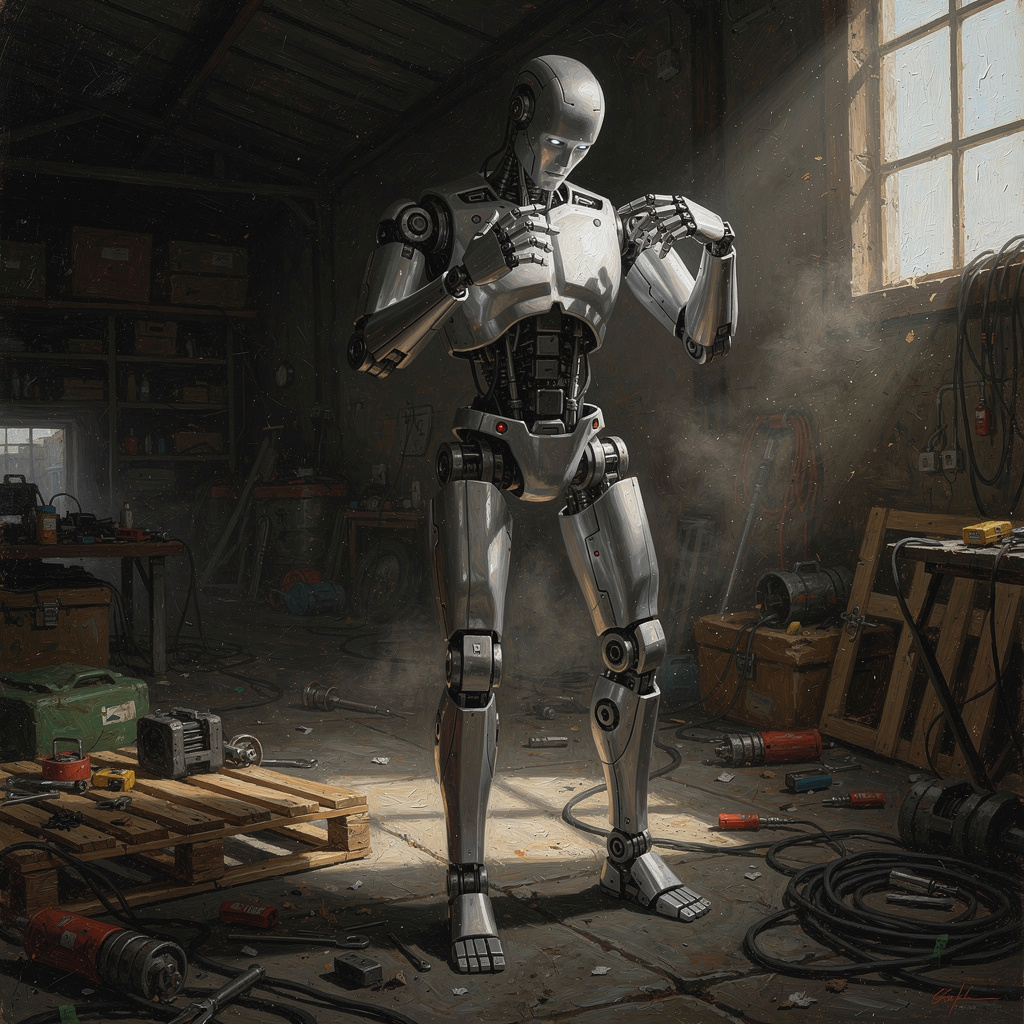
In the gleaming halls of tech conferences and venture capital pitch meetings, humanoid robots have long been presented as the inevitable future of work. Sleek androids performing backflips, gracefully assembling products, and seamlessly integrating into human spaces have captivated investors and the public imagination alike. Yet there's a growing chorus of candor emerging from an unexpected source: the very companies building these machines are now openly acknowledging what skeptics have long suspected—humanoid robots are profoundly overhyped.
This admission represents a pivotal moment in the robotics industry. Despite billions of dollars in venture capital flooding into humanoid robot startups, the insiders developing these technologies are confessing that their creations remain far from practical utility in industrial or domestic settings. The gap between impressive demonstrations and real-world deployment has become impossible to ignore, even for the optimists who stand to profit most from the technology's success.
The Hype-Reality Gap: Demos Versus Deployment
There's an important distinction that separates cutting-edge robotics from viable products: controlled demonstrations versus unstructured real-world environments. Humanoid robots excel at the former. They can perform choreographed routines, execute predetermined tasks in laboratory settings, and generate viral moments that capture headlines and investor attention. But this carefully curated success masks a far more troubling reality.
When these machines venture into actual warehouses, factories, or homes—environments filled with variables, obstacles, and unexpected challenges—they struggle dramatically. The technical hurdles are formidable: achieving reliable dexterity in robotic hands, developing perception systems that can genuinely understand complex environments, and creating adaptability that allows machines to respond to situations they weren't explicitly programmed for.
What dazzles in a controlled demo proves catastrophically inadequate in the messy reality of industrial or domestic work. The backflip that goes viral on social media represents a carefully choreographed moment, not a demonstration of the machine's ability to handle unexpected challenges or work alongside humans in unpredictable conditions.
Why Even the Makers Are Speaking Out
What makes this moment particularly significant is that humanoid robot companies themselves are breaking ranks with the broader tech industry's tendency toward unbridled optimism. Rather than doubling down on promotional narratives, leaders at major robotics startups are openly discussing the substantial advancements still required before their products move from prototype phase to practical deployment.
This candor likely stems from multiple pressures. First, there's the reality of engineering—you cannot fake progress indefinitely when you're actually trying to build functioning machines. Second, there's the growing awareness that overpromising creates a credibility crisis. When investors and the public expect transformative products and receive prototypes instead, disappointment inevitably follows. Third, there's the sobering recognition that the timeline for practical humanoid robots extends well beyond current expectations, and probably significantly further.
The companies making these admissions understand something crucial: sustainable investment and genuine technological progress require honest assessment of where the technology actually stands. Continued exaggeration would only accelerate the inevitable backlash when reality fails to match expectations.
A Broader Pattern of Tech Overpromising
The humanoid robot situation doesn't exist in isolation. It reflects a recurring pattern in the technology industry where investor enthusiasm and promotional narratives consistently outpace technological maturity. We see this dynamic playing out across artificial intelligence more broadly, where recent years have introduced a new vocabulary of hype: "superintelligence," "slop," and other terms that simultaneously promise revolutionary change while acknowledging the messy reality of current AI systems.
Consider the broader AI landscape. Despite decades of investment and recent dramatic advances in language models and neural networks, AI has failed to deliver on many of its most ambitious promises. Where is the AI-driven scientific progress that was supposed to revolutionize medicine, physics, and fundamental research? The honest answer is that human expertise remains essential, and AI breakthroughs in these domains remain largely aspirational rather than actual.
Humanoid robots occupy a similar space—perpetually on the verge of transformation, perpetually delayed by technical challenges that prove far more complex than anticipated. The pattern is familiar: bold visions capture attention and capital, prototypes generate excitement, timelines slip, and eventually, the technology either delivers or faces a reckoning.
The Path Forward: Realistic Timelines and Honest Assessment
So what does this moment mean for the future of humanoid robotics? The candor from industry insiders suggests a maturation of the sector, at least among the more thoughtful players. Rather than promising robots in warehouses by near-term dates, companies are now openly discussing timelines that extend well into the future—acknowledging that the engineering challenges are more daunting than initial projections suggested.
This recalibration, while humbling for the industry, may ultimately prove healthy. Investors who understand the true timeline and challenges can make more informed decisions. Researchers can focus on genuine technical breakthroughs rather than performative demonstrations. And the public can develop realistic expectations about when—or if—humanoid robots will actually transform labor and daily life.
The most productive path forward likely involves sustained investment in fundamental research alongside honest communication about limitations. Humanoid robots may eventually prove valuable in specific, well-defined applications before expanding to broader utility. The technology may find its initial use cases in dangerous or highly repetitive tasks where the cost of robots becomes justified despite their current limitations.
But this journey will take longer, prove more difficult, and require more fundamental breakthroughs than the hype cycle suggested. The companies now admitting this reality are, paradoxically, demonstrating more credibility than those continuing to promise imminent transformation.
Conclusion: The Value of Honest Reckoning
When the people building humanoid robots admit that their creations are overhyped, it's worth taking seriously. This confession represents not a failure of the technology but a maturation of the industry's understanding of what it will actually take to build practical, deployable machines. The gap between impressive demonstrations and real-world utility remains vast, and bridging it will require sustained effort, substantial innovation, and realistic timelines.
The humanoid robot reckoning ultimately reflects something important about technological progress: genuine advancement rarely follows the narrative arc of hype cycles. Instead, it emerges through patient research, honest assessment of limitations, and willingness to revise expectations based on technical reality. As the robotics industry recalibrates its promises and timelines, it's modeling the kind of intellectual honesty that the broader technology sector desperately needs. The robots may not be coming to your warehouse or home as soon as venture capitalists once promised—but the industry's growing willingness to say so honestly suggests a more sustainable path forward.