
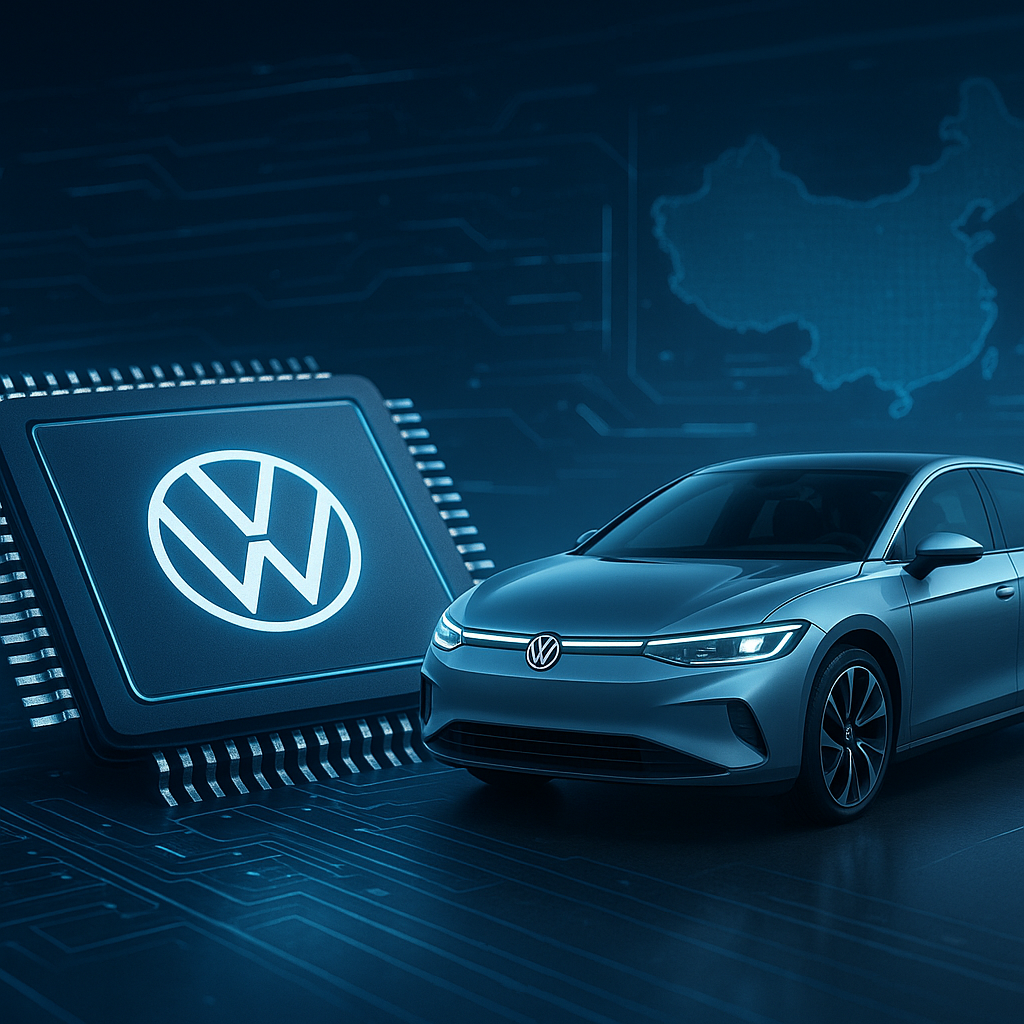
Introduction: A Game-Changer in the Fast Lane
As someone who's followed the automotive industry's twists and turns for over a decade, I've seen giants like Volkswagen navigate everything from diesel scandals to the electric vehicle boom. But this latest move? It's a real eye-opener. Volkswagen is teaming up with China's Horizon Robotics through their joint venture, CARIZON, to develop its very first in-house chip for smart cars. Announced this week, this isn't just about building better cars—it's Volkswagen's strategic pivot to dominate China's massive, tech-hungry auto market. With autonomous driving on the horizon (pun intended), this chip could redefine how we think about self-driving vehicles. Let's dive into what this means, why it's happening now, and what it spells for the future.
The Partnership: Teaming Up with Horizon Robotics for Cutting-Edge Tech
At the heart of this story is CARIZON, Volkswagen's fresh joint venture with Horizon Robotics, a powerhouse in China's autonomous driving chip scene. Horizon isn't your average tech firm; they're specialists in AI-driven semiconductors that make cars smarter, safer, and more autonomous. Volkswagen, the German behemoth, brings its automotive muscle—decades of engineering know-how and a global manufacturing empire—to the table.
This collaboration is Volkswagen's first crack at self-developing a System-on-Chip (SoC) tailored for China. The chip? It's designed to supercharge advanced driver assistance systems (ADAS) and full-blown autonomous driving. Picture this: processing a flood of data from cameras, radars, and sensors at blistering speeds—up to 700 tera operations per second. That's the kind of computing power that turns a regular sedan into a rolling supercomputer, handling everything from lane-keeping to obstacle dodging in real-time.
From my vantage point as an industry watcher, this partnership is a masterstroke of complementary strengths. Volkswagen gets access to Horizon's AI wizardry without starting from scratch, while Horizon taps into VW's scale to push their tech into millions of vehicles. It's a win-win in a market where China isn't just playing catch-up—it's leading the charge in smart mobility.
Strategic Shift: Why Volkswagen is Going In-House in China
Volkswagen's move marks a seismic shift from relying on off-the-shelf chips from suppliers like Nvidia or Intel to crafting its own silicon. Why now? Blame it on the global chip crunch that's plagued the auto world since the pandemic, exposing vulnerabilities in supply chains. Carmakers are waking up to the fact that semiconductors aren't just components—they're the brains of the modern vehicle.
In China, where VW sells nearly 40% of its cars, the stakes are sky-high. The market is a battleground for electric and smart vehicles, with homegrown rivals like BYD and NIO already flaunting advanced autonomy features. Volkswagen's response? A localized, full-stack strategy dubbed 'China Speed.' They're aiming for 80% in-house development, meaning everything from chip design to software integration happens under their roof—or in this case, in partnership with local experts.
The timeline is ambitious: expect this high-end chip to hit the roads in three to five years. That's Volkswagen's way of saying they're not messing around. By building in China, they're cutting costs, dodging tariffs, and aligning with Beijing's push for intelligent transportation. It's also a hedge against U.S.-China tech tensions—why rely on Western suppliers when you can innovate locally? As I've analyzed in past reports, this vertical integration trend is sweeping the industry; Tesla's been doing it for years with their Dojo chips, and now even BMW is dipping toes into custom silicon.
Broader Implications: Reshaping the Global Auto Landscape
This isn't an isolated play—it's part of Volkswagen's diversified semiconductor playbook. Just recently, they've inked deals for chips from Nexperia, a Chinese-owned firm, blending local and global sourcing. But developing their own SoC through CARIZON could set a template for other markets. Imagine VW spinning up similar ventures in Europe or the U.S., tailoring chips to regional needs like stricter emissions regs or different driving norms.
For the Chinese market, it's a boon. With EVs and smart cars exploding—China's already the world's largest EV hub—this chip will help VW compete head-on with domestic players who've integrated autonomy faster. Experts I've spoken with, including those from Verified Market Research, highlight how this reduces dependency on external vendors, potentially boosting margins on premium features like Level 4 autonomy.
Zoom out, and you see the ripple effects. The auto industry's semiconductor spend is projected to hit $100 billion by 2030, and moves like this accelerate that. It strengthens VW's hand in a cutthroat arena, where innovation speed trumps legacy alone. Plus, collaborating with Horizon signals to regulators and partners that VW is all-in on China, fostering goodwill in a market that's increasingly protectionist.
Conclusion: Accelerating Toward a Smarter Future
Volkswagen's chip odyssey with Horizon Robotics isn't just tech news—it's a harbinger of how traditional automakers are evolving into tech titans. By embracing in-house development, VW is future-proofing itself against supply shocks and positioning for leadership in autonomous driving. The real test will come in those three to five years: Can they deliver a chip that not only matches but outpaces the competition? If they do, it could cement VW's resurgence in China and beyond, driving us all toward a world where cars think faster than we do. As an expert who's seen the industry's ebbs and flows, I'm optimistic—this could be the spark that ignites broader innovation across the board.
Brief Summary
Volkswagen's joint venture with Horizon Robotics to develop its first in-house chip underscores a strategic push into China's smart car market, focusing on advanced autonomy with 700 tera operations of power. This move reflects industry-wide vertical integration to secure supply chains and compete with local EV leaders. Ultimately, it positions VW for rapid innovation in the world's largest auto market.