
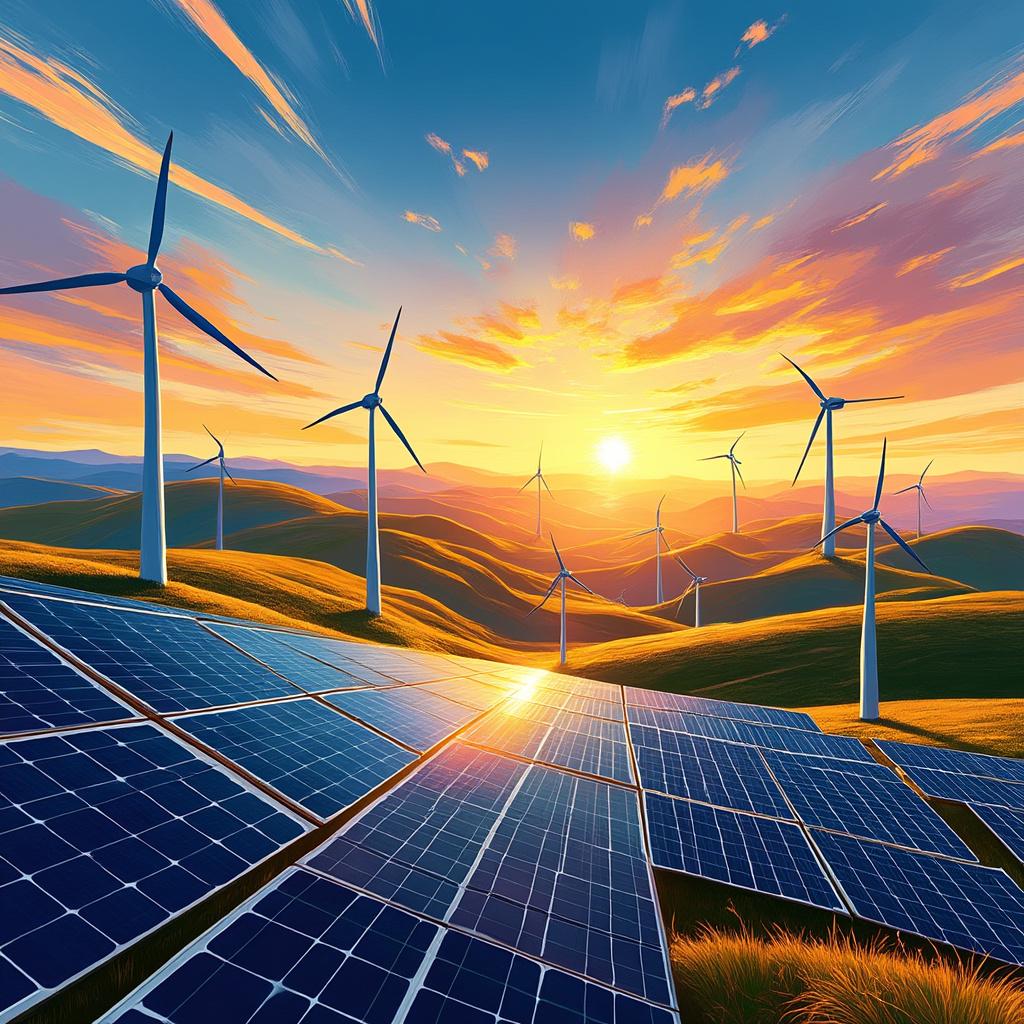
Why 2025's Renewable Energy Breakthrough Reshapes Your Future
When Science magazine—the prestigious journal of the American Association for the Advancement of Science (AAAS)—announces its annual Breakthrough of the Year, the scientific community takes notice. But when that breakthrough isn't a new drug, a quantum computing milestone, or a space exploration feat, but rather the "seemingly unstoppable growth of renewable energy worldwide," it signals something profound: we're witnessing a fundamental reshaping of how human civilization powers itself.
For the first time since the Industrial Revolution, we're transitioning away from fossil fuels—ancient solar energy stored in the form of coal, oil, and natural gas—toward directly harnessing the sun's power. This isn't merely another incremental technological improvement. It's a tipping point that will reshape economies, geopolitics, and our collective future.
The Historic Energy Transition Begins
The selection of renewable energy as 2025's Breakthrough of the Year represents far more than recognition of a growing industry. It acknowledges a fundamental shift in how humanity powers itself. For nearly 250 years, since coal powered the first steam engines, our civilization has operated on a simple premise: extract ancient energy stores and burn them. This model built the modern world, lifted billions from poverty, and enabled unprecedented technological advancement.
Yet it also created an existential problem. The carbon released by plants millions of years ago when they were buried is now being released back into our atmosphere in mere centuries, fundamentally altering our climate.
What makes 2025 different is that renewable energy is no longer a niche alternative pursued by idealists and climate activists. The data is unambiguous. Global renewable capacity additions exceeded 500 gigawatts in 2024 alone, according to the International Renewable Energy Agency (IRENA). The International Energy Agency projects that renewables will supply 35% of global electricity by the end of 2025. These aren't marginal increases—they represent a wholesale transformation of the world's power infrastructure.
China is leading this charge, deploying solar and wind capacity at unprecedented scales. But this isn't a Chinese phenomenon. From Europe's aggressive Green Deal implementation to the United States' transformative Inflation Reduction Act, renewable deployment is accelerating across every major economy. The story is consistent: the age of fossil fuel dominance is ending, not because of ideology, but because of economics.
The Economics Have Shifted Permanently
One of the most significant drivers of this breakthrough is something rarely celebrated in headlines: the dramatic collapse in renewable energy technology costs. Solar panel costs have declined by approximately 90% over the past decade. Wind turbine efficiency has improved while costs have plummeted. Battery storage—the critical technology needed to manage renewable energy's intermittency—has seen cost reductions that would have seemed impossible just five years ago.
This cost revolution has fundamentally altered the investment calculus. Renewable energy projects now offer competitive returns without subsidies in most markets. Major institutional investors, from pension funds to sovereign wealth funds, are redirecting capital away from fossil fuels not out of environmental conviction alone, but because the financial case for renewables has become overwhelming.
Policies like the U.S. Inflation Reduction Act and the EU Green Deal have accelerated this transition by providing investment certainty and supporting the development of supply chains, manufacturing capacity, and grid infrastructure. But these policies are working with market forces, not against them. The underlying economics are simply more favorable for renewables.
This matters because it suggests the transition is now self-sustaining. Even if political winds shift, even if climate concerns diminish in public consciousness, the economics of renewable energy will continue driving deployment. We've reached an inflection point where the old energy system isn't being abandoned because it's "bad"—it's being replaced because the new system is better.
Ripple Effects Across Every Sector
The renewable energy breakthrough doesn't exist in isolation. It's already catalyzing transformations across interconnected industries. The electric vehicle revolution, for instance, becomes far more compelling when the electricity powering those vehicles comes from renewable sources. Tesla, Rivian, Nio, and emerging EV manufacturers worldwide are benefiting from a virtuous cycle: as renewable electricity becomes cheaper and cleaner, the value proposition of electric vehicles strengthens, driving adoption, which in turn increases demand for renewable electricity.
This interconnection extends to grid modernization, energy storage, smart building technologies, and emerging sectors like green hydrogen production. The renewable energy breakthrough is the foundational technology enabling a cascade of related transformations.
Geopolitically, the implications are equally profound. Energy independence—a goal pursued through military interventions and diplomatic maneuvering for over a century—becomes achievable for nations with sufficient solar and wind resources. The leverage once wielded by oil and gas exporters diminishes as countries can increasingly power themselves. This reshuffles global power dynamics in ways we're only beginning to understand.
The Road Ahead: Challenges and Opportunities
While the 2025 Breakthrough of the Year designation celebrates remarkable progress, significant challenges remain. Fossil fuels still supply approximately 80% of primary global energy. The transition of heavy industry, aviation, shipping, and heating systems remains incomplete. Grid infrastructure in many regions requires substantial modernization to accommodate distributed renewable generation.
Yet the direction is unmistakable. When the world's most prestigious scientific institution recognizes renewable energy growth as the year's most significant breakthrough, it's acknowledging that we've entered a new era. The question is no longer whether the energy transition will happen, but how quickly we can execute it and whether we can manage the economic transition for workers and communities dependent on fossil fuel industries.
A Watershed Moment
Science magazine's 2025 Breakthrough of the Year recognition of renewable energy's unstoppable rise marks a watershed moment in human history. We're witnessing the end of the fossil fuel era not through forced abandonment, but through superior alternatives. The transition from ancient solar energy captured millions of years ago to direct harnessing of the sun's power represents a fundamental reset in humanity's relationship with energy.
This breakthrough matters because it touches everything: the electricity powering your home, the vehicles we drive, the geopolitical relationships between nations, and ultimately, the habitability of our planet. For the first time, solving the climate crisis and pursuing economic growth are aligned objectives rather than competing ones.
The renewable energy revolution isn't coming. It's already here. And 2025 is the year the world officially recognized it.